

Cart
0
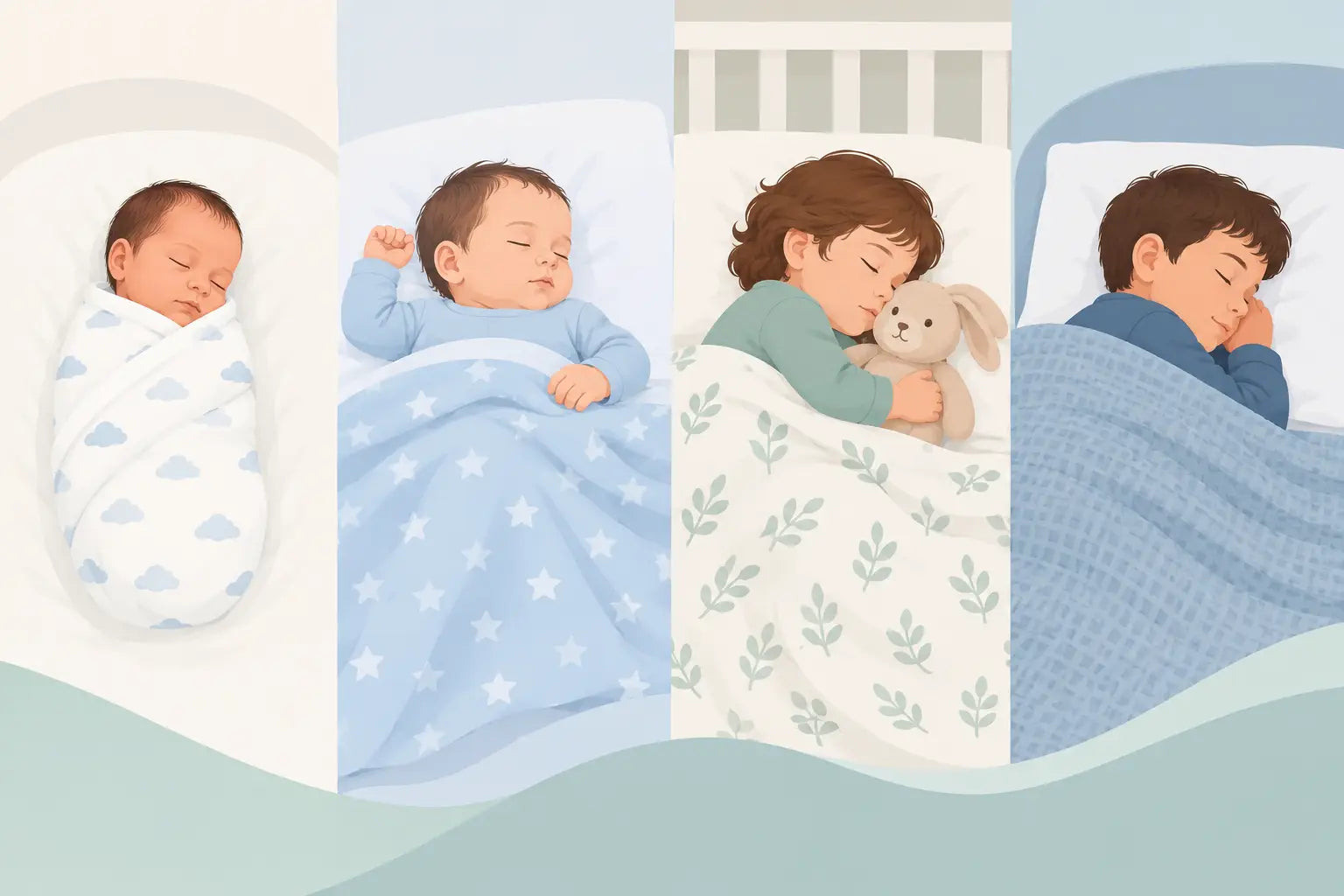
A soft baby blanket can become part of the sweetest moments of early parenthood: a snuggle after a bottle, a stroller walk on a cool morning, or a favorite layer during story time. But baby blanket safety changes depending on where and how your little one is resting. The same blanket that feels comforting in your arms can be unsafe in a crib for a young baby.
Here is the simple rule that gives many new parents peace of mind: for babies under 12 months, keep the sleep space clear of loose blankets and other soft items. Cozy care still has a place - it just looks a little different at each stage. 💛
Baby Blanket Safety Starts With an Empty Crib
For every sleep, including naps, babies under age 1 should sleep on their backs on a firm, flat sleep surface designed for infants. The crib, bassinet, or play yard should have only a fitted sheet made for that product. Loose blankets, quilts, comforters, pillows, stuffed animals, and positioners do not belong in the sleep space.
Why? A young baby may not be able to reliably move their head away if fabric covers their face or if they become tangled in it. Soft bedding can also make the sleep surface less firm. This guidance applies even when the blanket is lightweight, tucked in, or a family favorite handed down through generations.
It can feel strange to look at an uncluttered crib when you are used to a cozy adult bed. For a baby, though, simple is safer. A clear sleep space leaves room for what matters most: easy, protected breathing.
What About a Blanket Tucked Around the Mattress?
Skip it. Even a blanket tucked tightly at the foot or sides of the mattress can loosen as a baby kicks and wiggles. Babies grow more mobile quickly, often before parents expect it, so a setup that seemed secure at bedtime may not stay that way overnight.
The same goes for blankets draped over the side of the crib or bassinet. Keep them out of reach rather than using them as nursery decoration near a sleeping baby.
Keep Baby Warm Without Loose Bedding
A bare crib does not mean your baby has to be cold. The safest approach is usually to dress your little one in comfortable layers appropriate for the room temperature, then add a properly fitted wearable blanket or sleep sack if needed.
A sleep sack is designed to keep the body warm while leaving the face and head uncovered. Choose one that fits your baby's current size and has a secure neckline and arm openings. It should not be so large that your baby can slip down inside it. Follow the manufacturer's age, size, and care instructions, and avoid products that add weight to the chest or body unless your child's health care provider has specifically advised you otherwise.
As a general comfort check, feel your baby's chest or the back of their neck rather than their hands and feet, which may naturally feel cool. If baby is sweaty, flushed, breathing quickly, or has damp hair, remove a layer. Overheating is not something to ignore.
A room that feels comfortable for a lightly dressed adult is often a reasonable starting point, but every home is different. Consider the season, airflow, pajamas, and whether your baby tends to run warm. The goal is cozy, not bundled.
Swaddles Are Not Blankets
Swaddling can be soothing for some newborns, but it has its own safety rules. Use a swaddle product as directed, keep it snug around the chest but loose around the hips and legs, and never cover baby's face. Stop swaddling as soon as your baby shows any signs of trying to roll over. This can happen earlier than many families anticipate.
Once rolling begins, transition to an arms-free sleep sack. Do not use a loose receiving blanket to recreate a swaddle after baby is showing signs of rolling.
When Can a Baby Sleep With a Blanket?
Many families wait until after their child's first birthday before introducing a small, lightweight blanket for sleep. At that point, toddlers generally have more mobility and can move away from fabric more easily. Still, age is only one part of the decision.
Consider your child's development and sleep habits, too. A child who moves all over the crib, pushes bedding away, or gets tangled easily may do better with a sleep sack a little longer. There is no prize for making the transition early. If your toddler sleeps happily and safely in a wearable blanket, it is perfectly fine to continue.
When you do introduce a blanket, start small and simple. A lightweight, breathable blanket is a better choice than a heavy quilt, oversized throw, or fluffy comforter. Keep pillows, large stuffed animals, and piles of bedding out of the crib, especially while your child is still young.
Choose a Blanket Made for Real Life
Blankets do plenty of wonderful work outside the crib. They can create a clean surface for supervised tummy time, provide a light layer during cuddles, add comfort in the stroller, or become a beloved lovey during toddlerhood. Choosing thoughtfully helps keep these everyday moments safer and easier.
Look for a blanket with soft, breathable fabric and securely finished edges. Check for loose threads, fraying seams, buttons, bows, ribbons, pom-poms, or other small decorative pieces that could come loose. A blanket should be in good condition, clean, and free from damage before each use.
Size matters, too. An extra-large blanket may be useful for playtime on the floor, but it can be cumbersome around a small baby. A smaller receiving blanket or lightweight stroller blanket is often easier to manage for quick outings and supervised snuggles.
For busy families, washable fabrics are a practical win. Babies spit up, drool, and turn a perfectly planned outing into a laundry-day moment. Having a few easy-care blankets means there is always a clean one ready for your little star.
Safe Blanket Use Beyond the Nursery
During Tummy Time and Floor Play
A blanket can make supervised floor play more comfortable, especially on a hard surface. Place it flat, check that it does not bunch around baby, and stay close. Tummy time is active, awake time - if your baby falls asleep, move them to their safe sleep space on their back.
In the Stroller
A light blanket can be placed over your baby's legs during a chilly walk, but keep it below the shoulders and away from the face. Avoid covering the entire stroller with a blanket, particularly in warm weather. Covering the opening can trap heat and reduce airflow, even if the day does not feel especially hot.
If you need extra protection from sun or wind, use the stroller's built-in canopy as intended and check on your baby often. A cool, comfortable ride is better than a tightly covered one.
In the Car Seat
Never place a thick blanket, coat, or padded layer underneath your baby or under the car seat harness. Bulky material can prevent the harness from fitting snugly against the body. Buckle baby in wearing thin, warm layers, adjust the harness properly, and then place a blanket over the secured harness if the car is cold. Remove it if baby becomes warm.
During Cuddles and Contact Naps
A blanket is lovely when an alert adult is holding and watching baby. Keep the fabric away from baby's face, and resist the urge to doze off on a couch, recliner, or adult bed while baby is wrapped in a blanket. If sleep is taking over, place baby in their own clear, flat sleep space.
Help Every Caregiver Follow the Same Plan
Baby blanket safety works best when everyone caring for your child knows the routine. Share the crib rule with grandparents, babysitters, daycare providers, and well-meaning visitors: under 1, no loose blankets in the sleep space.
It can help to prepare the sleep area before anyone arrives. Set out the right size sleep sack, make the crib with a fitted sheet only, and explain where extra blankets are meant to be used. A clear setup removes guesswork during a tired late-night handoff.
Gift buyers can help, too. A soft blanket is a thoughtful newborn gift, especially when paired with a gentle reminder that it is ideal for supervised snuggles, stroller rides, and future toddler comfort rather than infant crib sleep.
At Best Baby Care Outlet, we believe softness you can trust includes knowing when to use each cozy essential. The most comforting nursery choice is often the simplest one: a clear sleep space, a well-fitted sleep layer, and a baby cared for with love in every detail.
Your baby's blanket can still hold all the warmth of family memories. Save it for the moments you are close by, then let a safe, simple sleep space do its quiet work through the night. Happy babies, happy parents. 💛
