

Cart
0
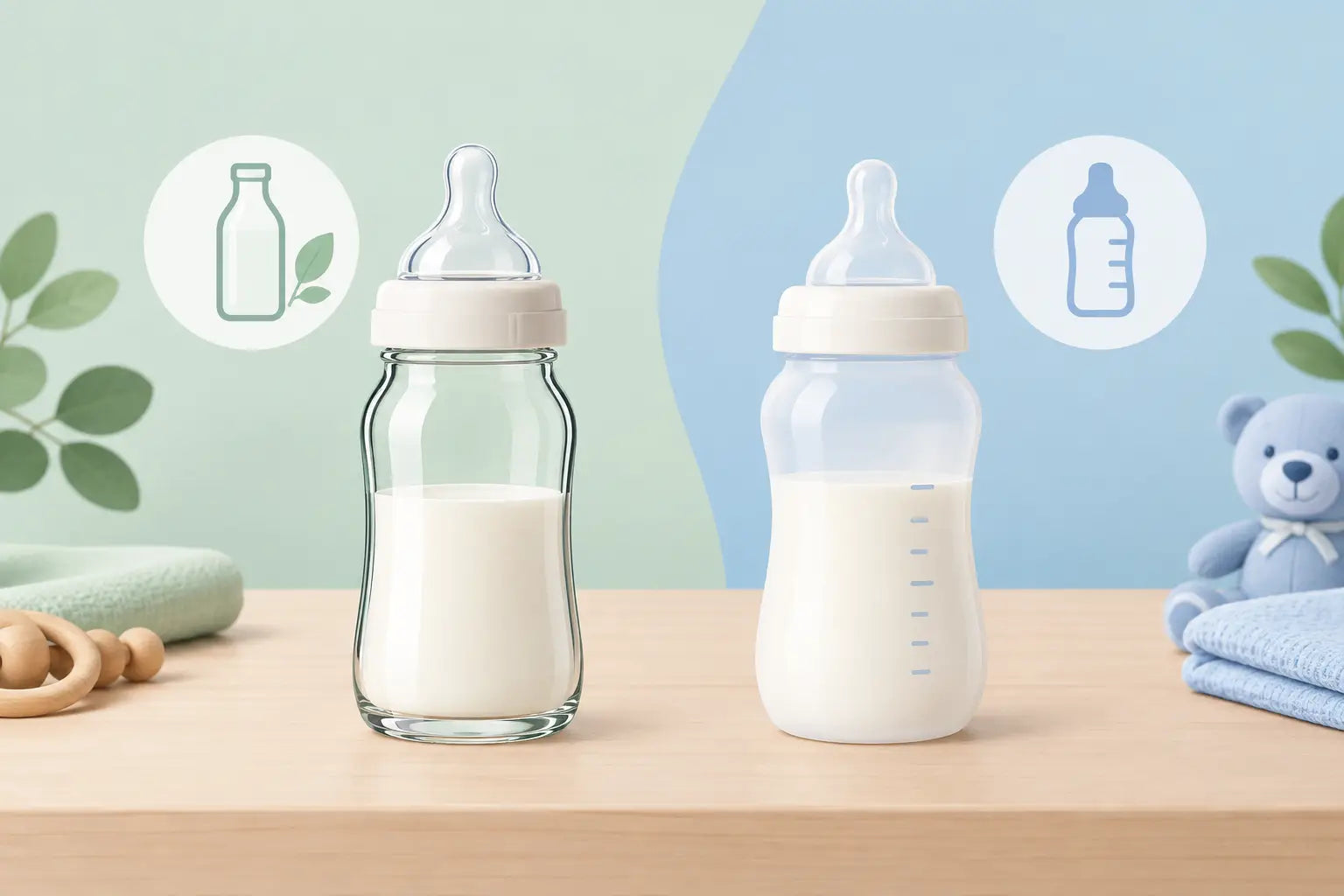
A 2 a.m. feeding is not the moment to wrestle with a bottle choice. When comparing glass versus plastic bottles, most parents are looking for the same thing: a safe, reliable bottle that helps their little star eat comfortably and makes daily life a bit easier. The best option depends on your baby’s age, feeding routine, budget, and how often bottles travel beyond the kitchen.
Both materials can be excellent choices when used as intended. Glass has a clean, durable feel and resists odors and stains. Plastic is lightweight, practical, and especially convenient for busy hands, diaper bags, and early attempts at self-feeding. Rather than treating one as automatically better, it helps to look at where each bottle shines.
Glass Versus Plastic Bottles: The Big Differences
The first difference parents notice is weight. Glass bottles feel substantial and are heavier, particularly once filled with breast milk or formula. That can be reassuring when an adult is holding the bottle, but less convenient when baby begins grabbing, lifting, and practicing independence. Plastic bottles are much lighter, which can make them easier to pack, hold, and pass to a caregiver.
Durability means different things for each material. A quality glass bottle can last a long time because it does not scratch easily, discolor, or absorb lingering smells. However, it can break if dropped on a hard floor. Many families use protective silicone sleeves for extra grip and a little peace of mind. Plastic bottles will not shatter when they tumble from a high-chair tray, but they may show scratches, cloudiness, or wear after repeated washing and heating.
Cost can also shape the decision. Glass bottles often have a higher upfront price, especially when you add sleeves or replacement parts. Their long life may balance that expense for families who care for them carefully. Plastic bottles are usually more budget-friendly to buy in multiples, which is helpful when you want enough clean bottles for daycare, overnight feeds, and those days when laundry and dishes get away from everyone.
Safety Starts With the Whole Bottle
Material matters, but bottle safety is bigger than glass or plastic alone. A well-made bottle should be in good condition, properly assembled, and paired with a nipple flow that suits your baby’s feeding stage. Always follow the manufacturer’s age, care, and heating instructions.
For plastic, look for bottles clearly labeled BPA-free. BPA-free plastic is widely available for baby feeding products, and reputable brands design their bottles for repeated everyday use. Still, inspect plastic bottles often. Replace any bottle that is deeply scratched, cracked, warped, sticky, cloudy, or difficult to clean. Those are signs it has reached the end of its useful life.
Glass bottles do not contain plastic, and many parents appreciate that they are nonporous and less likely to hold onto odors from formula or milk. But glass requires a different kind of attention. Check the bottle and sleeve before each use for chips, cracks, or damage around the neck and base. A chipped bottle should be replaced right away.
Whichever material you choose, avoid using a microwave to heat milk or formula. Microwaves can create uneven hot spots that may burn baby’s mouth, even if the outside of the bottle feels only warm. Instead, warm the bottle in a container of warm water or use a bottle warmer, then swirl gently and test the temperature on the inside of your wrist.
Cleanliness Matters More Than Material Alone
A bottle is only as helpful as it is easy to keep clean. Wash bottles, nipples, collars, caps, and valves after every feeding according to the product directions. A dedicated bottle brush can reach the bottom and threads, while a small nipple brush helps remove milk residue from tiny openings.
Glass usually comes out of the dishwasher looking clear and fresh, even after lots of use. Plastic can also be dishwasher-safe, but high heat may gradually affect certain bottles. Check the care label and place dishwasher-safe plastic pieces on the top rack if recommended. Let all parts dry completely before storing them to help prevent trapped moisture.
For newborns, premature babies, or babies with certain health needs, your pediatrician may recommend extra sanitizing steps. Otherwise, careful washing after each use is the everyday foundation. Clean, dry bottles support happy feeds and help parents feel confident with every ounce.
When Glass Bottles Make Sense
Glass bottles can be a lovely fit for families who do most feedings at home and want a bottle that stays clear and odor-free over time. They are also a strong choice for parents who prefer to minimize plastic contact with milk or formula.
They work particularly well when an adult is doing the holding, such as newborn feeds, bedtime bottles, or quiet cuddles in the nursery. A silicone sleeve can make the bottle easier to grip and offer protection from everyday bumps. If your household has tile floors, energetic siblings, or a baby who loves to toss things, keeping glass bottles for supervised home use may feel like the sweet spot.
Another practical advantage is temperature. Glass can retain warmth a little longer than lightweight plastic, though it can also feel hot faster. Always test the milk itself, not just the outside of the bottle, before feeding.
When Plastic Bottles Make Sense
Plastic bottles are made for movement. They are a favorite for stroller walks, road trips, childcare drop-offs, grandparents’ houses, and any day when you need several bottles packed and ready. Their lighter weight can make a real difference when your diaper bag already holds wipes, extra outfits, snacks, and all the little essentials.
They are also a practical choice as babies grow more independent. A baby learning to hold a bottle is likely to drop it - repeatedly. Plastic lets them practice without the worry of shattered glass. That confidence can make feeding time feel calmer for everyone. Happy babies, happy parents. 😊
Plastic may be the better fit if you need a larger bottle collection on a careful budget. Buying enough bottles to avoid washing after every single feed can make newborn life more manageable. Just plan to inspect and replace them when wear appears.
Many Families Use Both
You do not have to make a forever choice. Plenty of parents keep glass bottles at home and use plastic bottles for travel, daycare, or independent feeding. This approach gives you the long-lasting clarity of glass where breakage is less likely, plus the lightweight convenience of plastic when life is on the go.
Using both can also help you learn what your baby prefers. Some babies accept nearly any bottle; others have strong feelings about nipple shape, flow speed, and how the bottle feels in their hands. The nipple and vent system may affect feeding comfort more than the bottle body material. If your baby gulps, coughs, leaks milk, takes very long feeds, or seems frustrated, consider whether the nipple flow is appropriate before replacing every bottle you own.
A Simple Way to Choose
Start with your real routine, not an idealized one. If most feeds happen at home and you value a bottle that resists staining and odors, glass may be worth the extra care. If you need lightweight, shatter-resistant bottles for daily errands, childcare, or a baby learning to self-feed, plastic may be the more comfortable choice.
It is also wise to begin with a small number rather than committing to a large set before baby arrives. Try a few feeds, notice how your baby responds, and see what feels easiest to wash, hold, and pack. Your hands, schedule, and baby’s preferences deserve a place in the decision.
The right bottle is the one that supports safe, relaxed feeding in your family’s everyday rhythm. Choose quality, inspect it regularly, keep every part clean, and let the little moments - warm cuddles, sleepy eyes, and a satisfied milk-drunk smile - guide what works best.

