

Cart
0
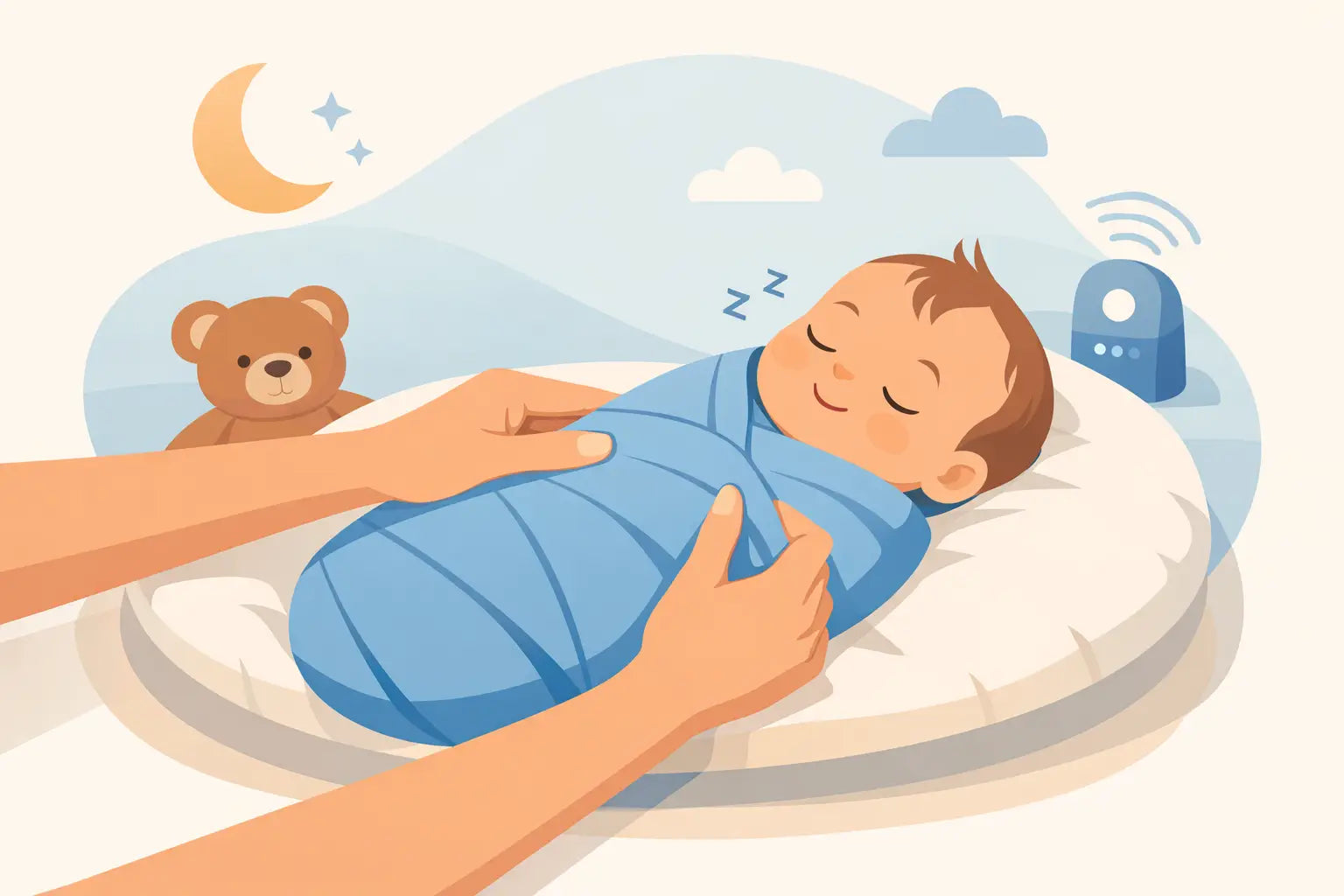
A snug swaddle can feel wonderfully familiar to a newborn who is still getting used to the wide-open world. Learning how to safely swaddle baby can help reduce those startling arm movements that wake some little ones, but the details matter. The safest swaddle is secure around the upper body, loose around the hips, and always paired with a bare, flat sleep space. 💛
Swaddling is not required for good sleep, and it does not prevent SIDS. Some babies love the cozy feeling, while others settle better with their arms free. Your baby is the guide. If swaddling seems to calm them and they are still showing no signs of rolling, use it as one gentle part of a safe, comforting bedtime routine.
When Swaddling Makes Sense
Swaddling is generally most useful during the newborn stage, when the startle reflex can be strong. A baby may suddenly fling out their arms in sleep, then wake themselves up just as they were settling. A properly fitted swaddle can give that tiny body a contained, cozy feeling without adding loose bedding to the crib.
Always place a swaddled baby on their back for every sleep, including short naps. Use a firm, flat crib, bassinet, or play yard surface with only a fitted sheet. Keep blankets, pillows, stuffed animals, positioners, and loose clothing out of the sleep area. A swaddle is worn by baby, not laid over baby.
If your baby was born prematurely, has low birth weight, has hip concerns, breathing concerns, or another health condition, check with their pediatric clinician before making swaddling part of the routine. Personalized guidance is always worth it when your little star has special care needs.
What You Need for a Safe Swaddle
Choose either a lightweight swaddle blanket or a properly sized swaddle wrap made for your baby's current size. Soft, breathable cotton is a practical choice for most homes. Avoid weighted swaddles, weighted sleep sacks, or any product that puts added pressure on a baby's chest or body.
A swaddle should feel secure, not tight. You should be able to slide two or three fingers between the fabric and your baby's chest. Their hips and knees need plenty of room to bend up and out naturally. Tight wrapping around the legs can interfere with healthy hip movement, so think snug at the chest and roomy below the waist.
Before each use, inspect wraps and blankets for torn seams, loose fasteners, or fabric that has become too small. A swaddle that rides up toward the face or comes undone is not safe for sleep.
How to Safely Swaddle Baby Step by Step
Start with a calm, dry baby
Swaddle after a diaper change and before placing baby down to sleep. Dress them in a light layer underneath, such as a short-sleeve or long-sleeve cotton bodysuit, depending on the room temperature. Babies can overheat more easily than adults, so skip hats indoors and resist the urge to add extra layers just because the swaddle looks thin.
Position the blanket correctly
For a square blanket, lay it flat in a diamond shape and fold the top corner down several inches. Place your baby on their back with their shoulders just below that folded edge. Their head and neck should stay completely above the blanket.
If you use a fitted swaddle wrap, lay your baby centered on the open wrap according to its instructions. The neckline should sit low on the chest, never near the chin or face.
Secure one side across the chest
Gently place one arm straight or slightly bent at your baby's side, then bring that side of the blanket across their chest. Tuck the fabric firmly under their back. The wrap should hold the upper body comfortably, but it should not squeeze the chest or restrict normal breathing.
Some newborns strongly prefer having their hands near their face. A swaddle designed for an arms-up position may work for those babies, as long as it fits correctly and keeps the fabric away from the face. Do not force a style that makes your baby fight the wrap or become more upset.
Leave the hips loose and flexible
Fold or bring the bottom portion of the blanket up loosely over the legs, leaving room for both knees to bend and legs to move apart. Then bring the remaining side across the chest and secure it under baby's back. The lower half should look more like a loose pouch than a tightly wrapped bundle.
Check that baby can kick, draw their knees up, and move their hips. That freedom is a key part of safe swaddling.
Do a final safety check
Before setting baby down, look at the neckline, chest, and hips. The fabric should stay below the shoulders, the face should be fully visible, and the wrap should not be loose enough to shift upward. If the swaddle is unraveling, rewrap it or choose a better-fitting wrap rather than trying to tuck in extra loose fabric.
Then place your baby on their back in their own clear sleep space. Even if they fall asleep in your arms, on the couch, or in a car seat during a trip, move them to a flat, firm sleep surface as soon as practical. Never leave a swaddled baby sleeping on a couch, recliner, adult bed, swing, bouncer, or in a car seat outside the car.
Keep Baby Comfortable, Not Too Warm
A warm baby is not necessarily a comfortable baby. Feel your baby's chest or the back of their neck rather than their hands and feet, which can naturally feel cool. Sweaty hair, flushed cheeks, rapid breathing, or a hot chest can be signs that they need a lighter layer.
Room temperatures vary from home to home, so there is no single outfit that fits every nursery. Consider the season, your home's thermostat, and the swaddle fabric. One breathable swaddle plus a light sleep layer is often enough. If you are unsure, it is usually safer to choose one less layer rather than one more.
Stop Swaddling When Rolling May Begin
This is the swaddling rule parents need to remember: stop swaddling as soon as your baby shows any attempt to roll over. That can happen earlier than expected, sometimes around 8 weeks, though every baby develops differently. Signs include repeatedly turning onto one side, lifting a shoulder, twisting their body, or rocking with enough force to shift position.
Once a baby can roll or is trying to roll, their arms must be free so they can use them to move and reposition themselves. A swaddled baby who rolls onto their stomach may not be able to push up or turn their head safely.
The change can feel disruptive if your baby has relied on a swaddle. You can transition to an appropriately sized, non-weighted sleep sack that leaves both arms free. Some families move to arms-out sleep immediately, while others use a transition product that releases one arm at a time, if it is specifically designed for that stage and still allows full arm freedom when rolling begins. A few unsettled nights are common, but consistency helps your baby learn a new sleep rhythm.
Common Swaddling Mistakes to Avoid
Parents are often told to make a swaddle "tight," but tight should never mean restrictive. Avoid wrapping both legs straight down, covering the face or chin, or adding a loose blanket over a swaddled baby. Do not use a swaddle once it is too small, and do not double up with multiple wraps to make it feel more secure.
It also helps to make sure every caregiver follows the same safe-sleep plan. Share your baby's current swaddling stage with grandparents, daycare providers, and anyone helping during naps. If your baby has started rolling, make that change clear: arms free for every sleep.
A safe swaddle is a simple act of care - gentle fabric, a clear sleep space, and a watchful eye on your baby's changing milestones. Trust what you see, adjust as your little one grows, and let comfort always work hand in hand with safety. Happy babies, happy parents. 💛

