

Cart
0
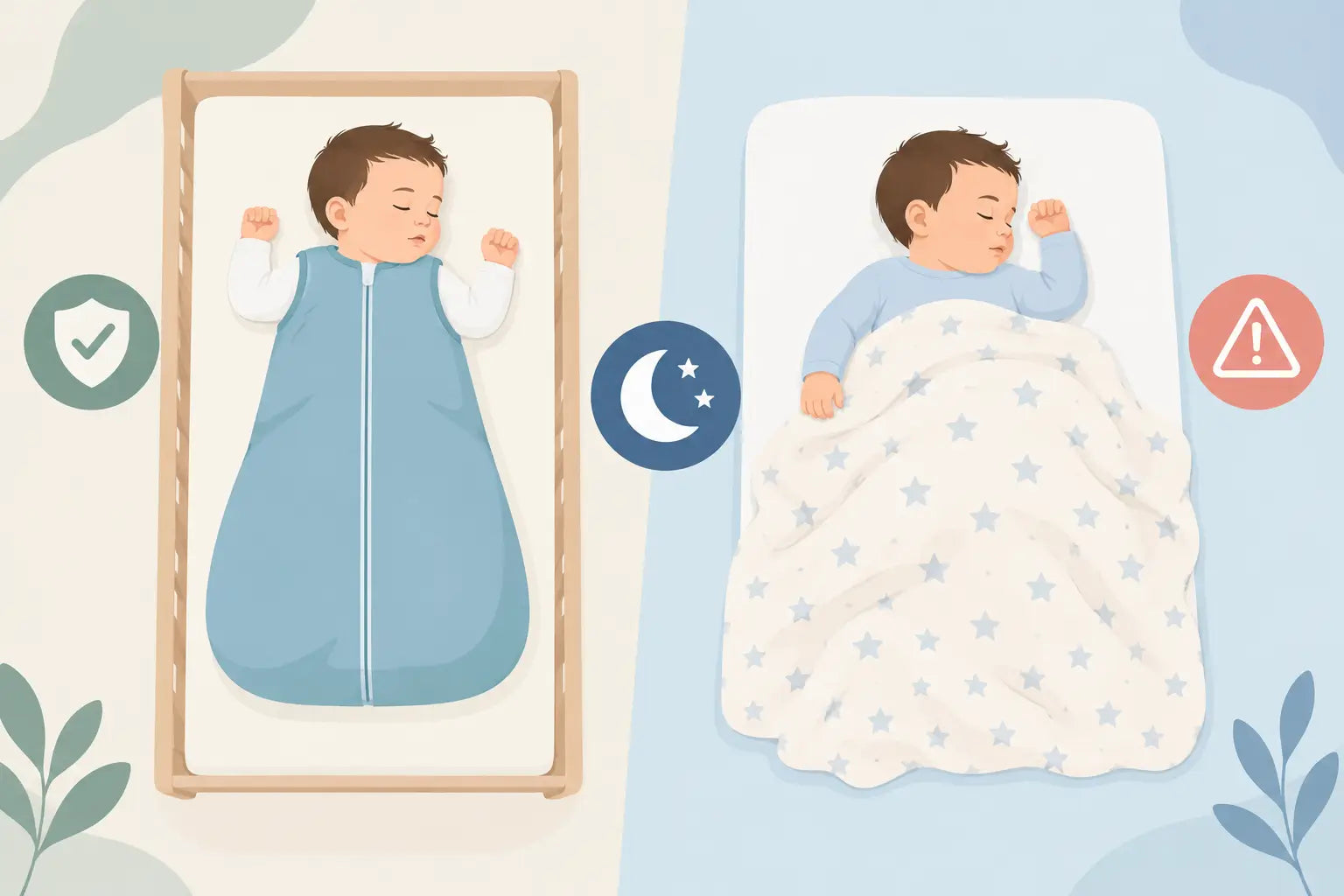
That tiny yawn after a long day deserves a cozy, calm bedtime. But when comparing a baby sleeping bag versus blanket, cozy cannot be the only deciding factor. For babies under 12 months, a wearable sleep layer is generally the safer choice because loose blankets can move around in the crib. The goal is simple: keep your little star comfortably warm while keeping their sleep space clear. 💛
Baby Sleeping Bag Versus Blanket: The Key Difference
In the United States, a baby sleeping bag is often called a wearable blanket or sleep sack. It is a sleeveless garment that zips or fastens around baby’s body, leaving their head and face uncovered. Unlike a loose blanket, it stays in place while baby wiggles, kicks, and changes position during sleep.
A traditional blanket is wonderfully useful for supervised cuddles, stroller rides, tummy time, and warmth in your arms. In a crib or bassinet, though, loose bedding can shift. Babies do not yet have the strength or awareness to consistently move fabric away from their face, which is why safe-sleep guidance recommends an empty sleep space for infants.
For a baby’s regular naps and nighttime sleep, the safer setup is a firm, flat crib or bassinet mattress with a fitted sheet and baby placed on their back. A properly fitted wearable blanket can add warmth without adding loose layers around them.
Why Wearable Blankets Work So Well for Infants
A good sleep sack solves a very real parent problem: baby needs an extra layer, but a blanket will not stay put. The enclosed design provides consistent coverage over the torso and legs while keeping the arms free for comfortable movement.
It can also become a helpful bedtime cue. When the same soft sleep sack comes on after a diaper change, feeding, and a quiet cuddle, baby may begin to recognize that sleep is next. Routines are not magic, especially in the newborn weeks, but small familiar signals can make evenings feel more predictable for the whole family.
The fit matters as much as the idea. The neck and arm openings should be snug enough that baby cannot slip down inside the garment, yet never tight or restrictive. Choose the size based on the manufacturer’s height and weight guidance, not just the age on the label. A sleep sack that is too large can create safety concerns, while one that is too small may be uncomfortable around the hips or chest.
Look for soft, breathable materials that suit your home and season. Cotton is a popular everyday choice because it feels gentle and is easy to care for. Some families prefer lighter fabrics for warm climates or warm nurseries, while others choose a slightly warmer option when the room runs cool.
Understanding warmth without overheating
Many wearable blankets use a TOG rating to indicate warmth. A lower TOG is lighter, and a higher TOG is warmer. It is a useful starting point, not a reason to bundle baby heavily.
Room temperature, pajamas, fabric weight, and your baby’s individual comfort all matter. In a mild room, a lightweight sleep sack over a cotton bodysuit or footed pajamas may be plenty. In a cooler room, you may choose warmer pajamas or a warmer wearable layer. Avoid hats, hooded sleepwear, heavy quilts, and weighted sleep products for sleep, as these can increase the risk of overheating or create other safety issues.
Instead of judging by baby’s hands or feet, which can feel cool even when they are comfortable, gently check their chest or the back of their neck. Sweaty hair, flushed cheeks, hot skin, or rapid breathing can be signs that they are too warm. When unsure, use fewer layers and ask your pediatrician for guidance tailored to your child.
When Is a Blanket Appropriate?
Blankets still earn their place in a baby’s everyday essentials. A soft receiving blanket can be lovely for a supervised snuggle. A stroller blanket can help on a chilly walk when an adult can see and monitor baby. A larger blanket also makes a thoughtful nursery accessory, play mat, or gift for a growing child.
The key is where and when it is used. For an infant’s unsupervised sleep in a crib, bassinet, or play yard, keep loose blankets out of the sleep area. Do not tuck a blanket around the mattress, even if it seems secure at bedtime. Babies move more than we expect, and a blanket can loosen as they kick.
Once a child reaches their first birthday, families often start considering a small, lightweight blanket. Development varies, so continue to prioritize a simple sleep space and follow your pediatrician’s advice if your child was born early, has medical needs, or has specific sleep concerns. Many toddlers still enjoy a wearable blanket because it cannot be kicked off during the night.
Swaddles, Sleep Sacks, and the Rolling Milestone
A swaddle and a sleep sack are not the same thing. Swaddling wraps the arms in, which may soothe some newborns. A wearable blanket leaves the arms free. As soon as baby shows signs of trying to roll, swaddling with the arms restrained should stop. This can happen earlier than many parents expect.
At that point, an arms-out sleep sack is often an easy transition. It keeps the familiar cozy feeling around the body while allowing baby to use their arms freely. If your baby resists the change for a few nights, that is normal. Keep the routine gentle and consistent, and make sure the sleep sack fits correctly.
Never use a weighted swaddle, weighted sleep sack, or weighted blanket for baby sleep. The safest sleep layers are lightweight, well-fitted, and free from added weight, cords, loose decorations, or bulky attachments.
How to Choose the Right Wearable Blanket
The best option is the one that fits your baby, your climate, and your bedtime routine. Before adding a sleep sack to your nursery essentials, check the closure, fabric, size range, and care instructions. A two-way zipper can make nighttime diaper changes easier, while a zip guard helps protect delicate skin from rubbing.
Think about how many you will realistically use. Having two or three in rotation can be practical when spit-up, diaper leaks, or laundry day arrive right on schedule. Choose colors and prints that make you smile, but let comfort and fit lead the decision. Softness you can trust is always more valuable than a cute pattern alone.
For warmer months, breathable lightweight styles are usually the most useful. For cooler seasons, avoid automatically choosing the thickest option. Layering with appropriate pajamas gives you more flexibility as the room temperature changes from one night to the next.
A Simple Safe-Sleep Check Before Bed
Before laying baby down, take a quick look at the sleep space. The mattress should be firm and flat with only a fitted sheet. Baby should be placed on their back for every sleep, wearing a correctly sized wearable blanket if extra warmth is needed. Keep pillows, stuffed animals, bumpers, nests, positioners, loose sheets, and blankets out of the crib.
If baby falls asleep in a car seat, swing, bouncer, or stroller, move them to their flat sleep space as soon as you can. It may feel like one more step at the end of a tiring day, but these small choices help create a safer place for precious rest.
The baby sleeping bag versus blanket decision does not have to make bedtime complicated. Save blankets for the sweet, supervised moments you share together, and choose a well-fitting wearable blanket for crib sleep during the first year. A clear crib, a comfortable baby, and a loving routine can help everyone settle in with a little more peace of mind. Happy babies, happy parents. ✨

