

Cart
0
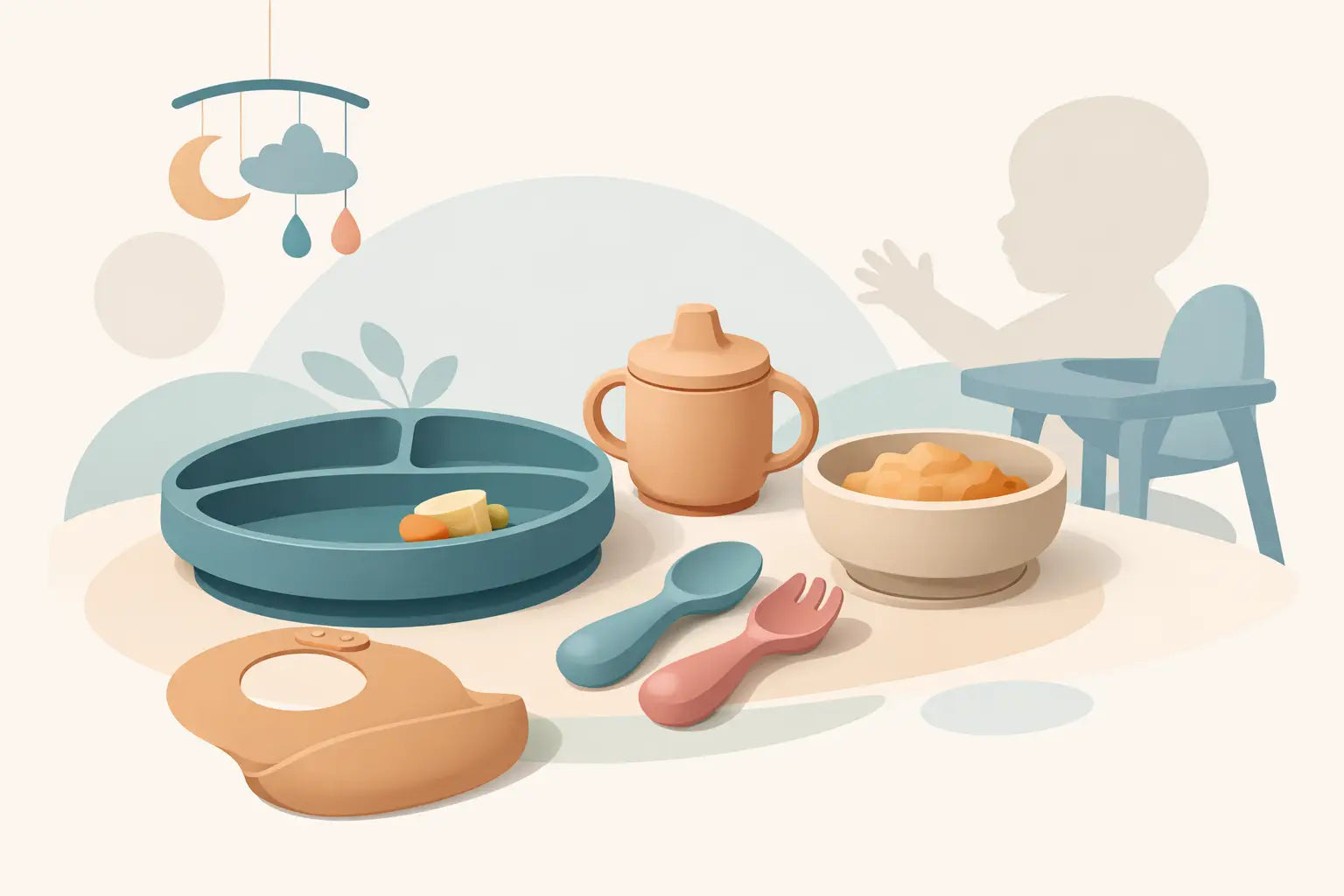
The first spoonful rarely goes straight into your baby’s mouth. It may land on their chin, in their hair, or somehow on the floor beside the high chair. That is all part of learning! The right silicone baby utensils can make these messy, sweet first meals feel more comfortable for little hands and gentler on tender gums. 🥄
For parents, a baby spoon or fork may seem like a small purchase. But during the transition from milk feeds to purées, soft foods, and self-feeding, these everyday tools support important new skills. A thoughtfully chosen utensil helps you offer food with more confidence while giving your little star room to practice independently.
Why Silicone Baby Utensils Are a Popular Mealtime Pick
Silicone is loved by many families because it is soft, flexible, and easy to clean after a very enthusiastic meal. Unlike hard metal utensils, a soft silicone spoon is less likely to feel harsh against sensitive gums. This can be especially reassuring when babies are teething or still getting used to the feel of food in their mouths.
Many silicone utensils are also lightweight enough for early self-feeders to hold. A short, rounded handle gives a baby something manageable to grip, even when coordination is still a work in progress. The goal is not a perfectly tidy meal. It is helping your child learn how to scoop, bring food toward their mouth, and explore new textures at their own pace.
There are trade-offs, of course. Silicone can hold on to strong food odors if it is not cleaned thoroughly, and lighter colors may show stains from foods like berries, carrots, or tomato sauce. A quality utensil and prompt washing can help keep it looking fresh for longer.
What to Look for When Choosing Silicone Baby Utensils
Not every spoon is equally suited for every stage. A newborn does not need a self-feeding fork, while a determined toddler may quickly outgrow a very small training spoon. Start with your child’s feeding style, developmental stage, and favorite foods.
Soft, food-grade material
Look for utensils made with food-grade silicone and clear product information about the material. Parents commonly seek options that are free from BPA, PVC, and phthalates. These details make it easier to shop with peace of mind and focus on what matters most: sharing nourishing meals with your baby.
A smooth, one-piece design is often a practical choice. With fewer seams or crevices, there are fewer spots for food to collect. Run a finger around the edges before first use. The utensil should feel smooth, with no rough areas, peeling material, or sharp points.
A spoon bowl sized for little mouths
For early feeding, choose a spoon with a shallow bowl and a narrow, rounded tip. A spoon that is too deep can deliver more food than a baby can comfortably manage. A shallow scoop gives you better control over portions, whether you are serving oatmeal, mashed avocado, yogurt, or a vegetable purée.
For baby-led weaning, a pre-loaded silicone spoon can be useful for thicker foods. Your baby can grasp the handle and bring the spoon to their mouth without needing to master scooping right away. Smooth mashed sweet potato, ricotta, or thick yogurt tend to stay on the spoon better than thin liquids.
A handle made for learning
Long-handled spoons can be helpful when an adult is feeding baby from across a high-chair tray. Short, chunky handles are often easier for babies who want to take over. Some training spoons have textured or curved handles that support a more secure grip, especially when little fingers are slippery with food.
It depends on how your baby prefers to eat. Some babies happily accept help for months, while others reach for the spoon from day one. Having both a parent-feeding spoon and a baby self-feeding spoon on hand can make meals less of a tug-of-war.
Easy care for everyday life
Mealtime products should fit real family routines, not create extra work at the sink. Check the care instructions before buying. Many silicone baby utensils are dishwasher safe, but hand-washing can still be a good option when you want to remove lingering food residue quickly.
After each meal, rinse utensils soon rather than letting purées dry in place. Wash with warm, soapy water, rinse well, and allow them to air-dry completely. If you notice a soapy taste or scent, rinse again and consider using a smaller amount of mild dish soap. Avoid harsh scrubbers that could damage the surface.
Matching Utensils to Your Baby’s Feeding Stage
The best age to introduce utensils is not exactly the same for every child. Your pediatrician can offer guidance for your baby’s individual needs, especially if there are concerns about feeding, swallowing, or development. In general, babies may begin exploring pre-loaded spoons once they are ready for complementary foods and can sit with appropriate support.
At the earliest stage, a soft spoon is mostly an extension of the caregiver’s hand. Keep servings small, move slowly, and let your baby set the pace. If they turn away, close their mouth, or become upset, pause rather than pushing for one more bite.
As your baby becomes more interested in holding the spoon, offer a second utensil. You can use one to feed while they practice with the other. This simple approach keeps curious hands busy and gives your child a chance to copy what they see you doing.
Later, around the toddler stage, a silicone fork with rounded tines can introduce the idea of picking up soft bite-size foods. It is not meant to make every meal neat. It is there to build confidence through repetition, from spearing a banana slice to attempting a piece of scrambled egg.
A Few Safety Habits That Matter
Even the gentlest utensils need adult supervision. Always stay nearby while your baby eats, and inspect spoons and forks regularly. Replace an item if it is torn, cracked, sticky, deeply scratched, or showing signs of wear.
Keep utensil use seated at the table or in a properly secured high chair. Walking, crawling, or playing with a utensil in the mouth can create a safety risk. It is also wise to follow the manufacturer’s age recommendations and cleaning instructions, since product designs can vary.
Heat is another detail worth checking. Silicone may be heat resistant, but food can still become too hot for your baby. Stir warmed food well, test the temperature carefully, and avoid leaving utensils in very hot cookware or on heated surfaces unless the product instructions specifically say it is safe.
Building a Happy, Low-Stress Feeding Routine
The spoon matters, but the atmosphere around the meal matters too. Give your baby time to touch and smell food. Expect some refusal, some funny faces, and plenty of spills. New foods can take repeated, pressure-free exposure before a baby decides they are ready.
A bib with a catch pocket, a wipeable placemat, and a small set of dedicated utensils can make the practical side much easier. Keep a few clean silicone spoons in the diaper bag for restaurant meals, visits with family, or those days when a snack happens earlier than planned.
At Best Baby Care Outlet, families can find feeding essentials designed to bring comfort, function, and a little extra joy to the high-chair stage. Choose utensils with a comfortable shape, easy-care material, and a style that makes you smile when you set the table.
Your baby will not remember the first time they held a spoon, but you may remember the determined little grip, the proud expression, and the mashed avocado everywhere. Keep the tools simple, stay close, and let every small attempt be part of the fun. Happy babies, happy parents. 💛

