

Cart
0
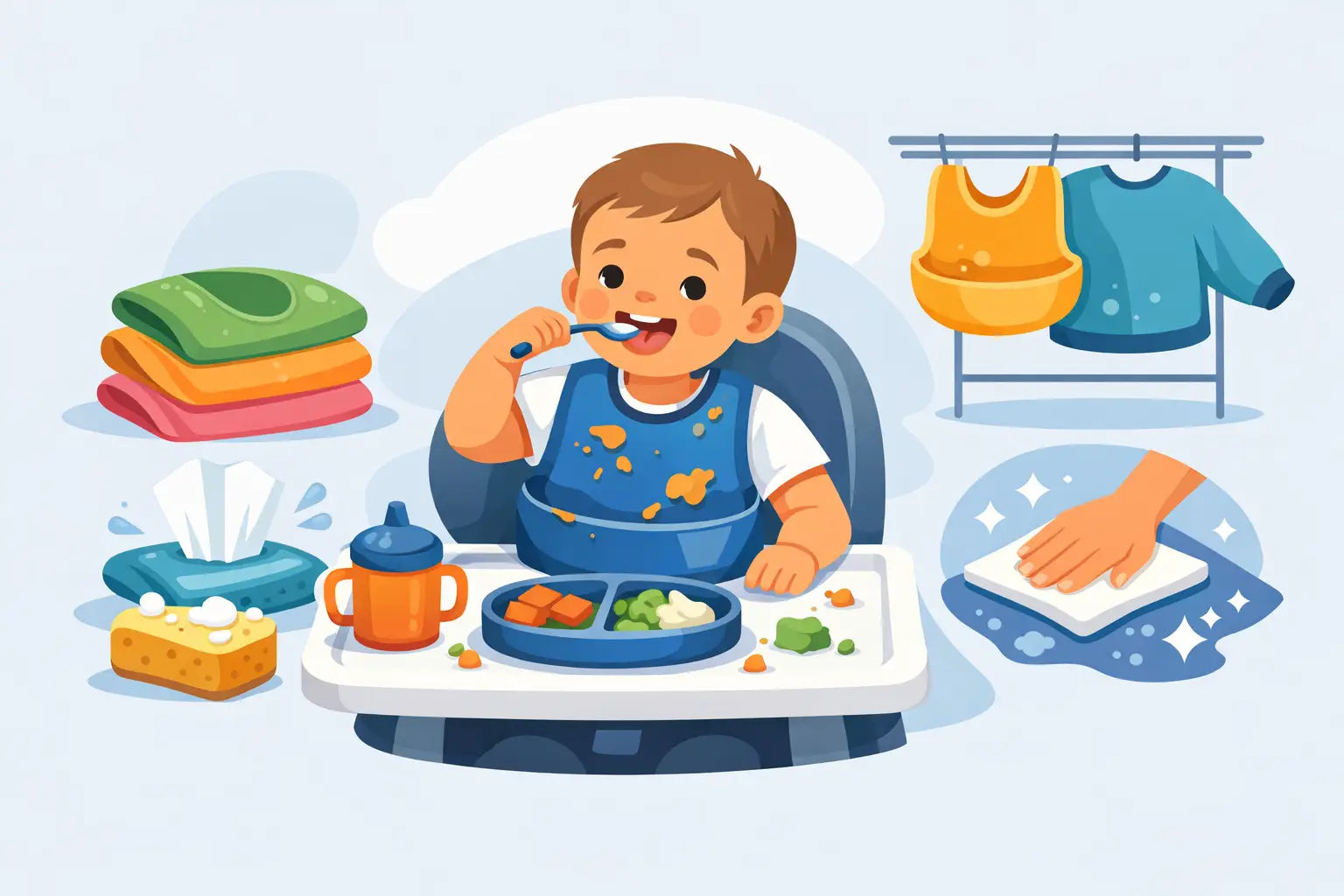
A spoonful of oatmeal on the tray is normal. A spoonful in baby’s lap, under the high chair, and somehow on their socks is a familiar little mealtime adventure. The best bibs for messy eaters will not stop every splatter, but they can protect clothes, catch dropped bites, and make those early feeding days feel much more manageable. Happy babies, happier parents. 😊
As your little star begins purees, finger foods, and independent spoon practice, a bib becomes more than a cute accessory. It is everyday feeding gear. The right style depends on how your child eats, what they wear, and how much cleanup you want to handle after breakfast, lunch, and dinner.
What Makes a Bib Great for Messy Meals?
A good messy-meal bib should cover enough of your child’s outfit to be useful without feeling stiff or uncomfortable. Look first at coverage, fit, material, and how easily the bib cleans. A beautiful bib that is hard to rinse or leaves a gap at the neckline may not earn a regular spot at the table.
For babies who are just starting solids, a soft bib that protects the chest may be all you need. Once they are grabbing loaded spoons, squeezing berries, or enthusiastically tossing pasta, broader coverage and a catch pocket become much more helpful. There is no single best option for every age, and many families keep two or three bib styles on hand.
Coverage matters more than it seems
A standard neck bib works well for milk dribbles, small snacks, and early spoon-feeding. For bigger meals, choose a bib that reaches low over the tummy. Long-sleeve bibs, often called smock bibs, provide the most protection for sleeves and shoulders, which is especially welcome when your child wears a favorite outfit or heads to daycare after breakfast.
More coverage does come with a trade-off. A full-sleeve bib can feel warmer, take up more space in a diaper bag, and require a little more effort to put on. It is ideal for especially messy foods and creative self-feeding, but a compact silicone bib may be the easier everyday choice for quick meals away from home.
A catch pocket can rescue lunch
A wide, structured food-catching pocket is one of the most useful features for self-feeders. It catches the crackers, peas, and pieces of banana that miss baby’s mouth, helping protect their lap and the floor. Some little ones even discover the pocket and happily retrieve a dropped bite themselves.
The key word is structured. If the pocket collapses against the bib or sits too high, it cannot catch much. Choose a bib designed to stay open while your child sits comfortably in the high chair. Check that it rests naturally against the chest rather than pressing into the tummy.
Best Bibs for Messy Eaters by Material
The best material is usually the one that fits your routine. Parents who want to rinse a bib after every meal often love silicone. Families doing lots of laundry may prefer soft fabric styles. Both can be smart choices when they are made with comfort and practical cleanup in mind.
Silicone bibs for quick wipe-downs
Soft silicone bibs are a favorite for purees, yogurt, sauces, and other wet foods. They are typically waterproof, easy to wipe, and simple to rinse in the sink after a meal. Many have a deep catch pocket and an adjustable neck closure, making them a practical choice for home, restaurants, and travel.
Look for flexible, food-safe silicone that bends easily rather than a thick bib that feels rigid at the neck. An adjustable closure is important because a bib that is too loose lets food slip beneath it, while one that is too tight can bother a wiggly baby. Wash the bib thoroughly, including the folds around the pocket and closure, then let it dry fully before storing it.
Silicone is convenient, but it does not cover arms. If spaghetti night regularly reaches elbows, pair it with a smock or choose a full-coverage option for that meal.
Fabric bibs for softness and everyday dribbles
Cotton, muslin, terry, and other absorbent fabric bibs are gentle against delicate skin. They are especially useful during bottle feeds, teething, and the early days of solids, when the main concern may be drool or small spills rather than a full food explosion.
Fabric bibs need changing sooner when they become wet, so having several available makes life easier. Choose machine-washable options with a secure closure, and follow the care label for washing and drying. Darker colors or playful prints can help everyday stains look less noticeable, while lighter colors may be a sweet choice for photos and special occasions.
For very messy meals, an absorbent bib alone can soak through. A waterproof-backed fabric bib offers extra protection, though it may take longer to dry after washing.
Long-sleeve smock bibs for maximum protection
Long-sleeve smocks cover the front, arms, and often part of the lap. They are wonderful for baby-led weaning, soup, berries, baked beans, and any meal where enthusiasm is greater than coordination. They can also pull double duty for painting, sensory play, and baking cookies together.
Choose a lightweight, wipeable fabric that gives your child room to move. Elastic cuffs help keep sleeves in place, while a back closure can make it harder for determined little hands to pull the bib off. Make sure the neckline is comfortable and that no loose ties or damaged fasteners are within reach.
Fit and Safety Checks Before Every Meal
Even the most practical bib should be comfortable. Fasten it securely, but leave enough space at the neck for easy movement and breathing. A bib should sit flat against the chest without rubbing the skin or bunching under the high-chair straps.
Inspect bibs regularly for cracks, torn stitching, loose snaps, peeling layers, or worn closures. Replace any bib that is damaged or no longer fits properly. Bibs are for supervised mealtimes only, so remove them when the meal is over and never leave a baby unattended while wearing one.
For babies with sensitive skin, choose soft materials and wash new fabric bibs before the first use. If your child is prone to irritation, fragrance-free detergent and a clean, dry bib at each meal can be a gentle place to start. When in doubt, your pediatrician can offer guidance tailored to your child’s skin needs.
Build a Bib Routine That Works at Home and Away
The simplest system is the one you will actually use. Keep a silicone or wipeable bib near the high chair for meals, with a few clean fabric bibs in the kitchen for bottles, drool, and snacks. After eating, wipe baby’s hands and face first, then remove the bib carefully so trapped crumbs stay inside the pocket instead of falling onto their clothes.
For outings, pack one easy-clean bib in a small wet bag or separate pouch. A bib that rolls or folds compactly is helpful when your diaper bag is already carrying bottles, wipes, a change of clothes, and all the little essentials. If a restaurant meal turns unexpectedly messy, you will be glad it is there.
At Best Baby Care Outlet, parents can find feeding essentials chosen with everyday comfort and practical care in mind. When shopping, consider your child’s age, favorite foods, and the moments that tend to create the biggest mess. A soft drool bib, a catch-pocket silicone bib, and a long-sleeve smock can make a useful little rotation for different parts of the day.
How Many Bibs Do You Really Need?
For a newborn or young baby, four to eight absorbent bibs can help you stay ahead of frequent drool and milk dribbles. Once solids begin, two or three wipeable feeding bibs are often enough for daily meals if you rinse them promptly, plus a few fabric backups for snacks and spills.
Families who do laundry less often, have twins, or send bibs to daycare may want more. It also helps to keep one spare in the diaper bag and another near the kitchen. The goal is not a perfectly spotless meal. It is giving your child room to learn, explore, and enjoy food while protecting a little more of the outfit underneath.
Those sticky fingers and sauce-speckled cheeks are part of learning. Choose bibs that make cleanup lighter, then let your little one practice with confidence, curiosity, and plenty of smiles.

