

Cart
0

Last Updated: October 24, 2026
Quick Summary
Layer baby clothes by using a breathable base layer against your baby's skin, adding middle layers like fleece or cotton sweaters for warmth, and using outer layers to protect from wind and moisture. The one-more-layer rule suggests dressing your infant in one more layer than you would wear in the same conditions, since newborns lose heat faster than adults.
- Base layers pull moisture away from skin; choose cotton or bamboo for breathability
- Middle layers trap warm air; fleece, wool, and knit fabrics create insulating air pockets
- Never wear thick puffy jackets under car seat harnesses; use the harness-fit test to check if layers are safe
- Check your baby's chest and neck every couple of hours to adjust layers as temperature changes
- Hats, mittens, and socks protect extremities that lose heat fastest and show cold first
Table of Contents
- The One-More-Layer Rule: Your Starting Point for Layering Baby Clothes
- Understanding Base Layers, Middle Layers, and Outer Layers
- Baby Clothes by Temperature Chart: Outfit Examples for Every Season
- How to Tell if Baby Is Too Hot or Cold
- Safe Baby Clothing Layers for Car Seats
- Baby Sleep Clothing by Room Temperature
- Adding and Removing Layers as Conditions Change
- Protecting Extremities: Hats, Mittens, Socks, and Feet
- Frequently Asked Questions
The One-More-Layer Rule: Your Starting Point for Layering Baby Clothes
The easiest way to dress your baby for changing weather is the one-more-layer rule: dress your infant in one more layer than you would wear in the same conditions.
Newborns lose heat faster than adults (Thermoregulation for very preterm infants in the delivery room: a narrative review).
At Best Baby Care Outlet, we help parents navigate these choices with practical guidance and carefully selected clothing.
Pro Tip
The one-more-layer rule is a starting point, not a strict rule. Pay attention to your baby's cues. Some babies run warmer or cooler than others. Watch for signs of comfort or discomfort as you adjust.
Understanding Base Layers, Middle Layers, and Outer Layers
When you layer baby clothes, they work best in three categories: base layers sit against your baby's skin, middle layers add warmth, and outer layers protect from wind and moisture.
This three-layer system gives you flexibility: skip the middle layer on a mild day, add two on a cold day, or wear only a base layer when it's warm.
Choosing Breathable Base Layers
Base layers pull moisture away from your baby's skin, keeping your infant dry.
Cotton works well in mild and warm weather: soft, breathable, and easy to wash. Explore baby bamboo fiber clothes for spring as a breathable base layer option.
Our Super Soft Baby Sleeping Bag Fluffy Fleece Newborn Blanket and Infant Sleepwear Temperature Guide help you understand how base layers work during sleep.
Key Takeaway
Breathable base layers keep moisture away from your baby's skin, which is the foundation of comfortable layering in any weather.
Adding Insulation with Middle Layers
Middle layers trap warm air close to your baby's body. Fleece, wool, and knit fabrics create air pockets that hold heat without adding bulk.
Cotton sweater vests and cardigans make excellent middle layers, easy to put on and remove as conditions change.
On very cold days, add two middle layers: a lightweight cotton sweater, then a fleece layer on top. This traps more warmth than a single thick layer.
Protective Outer Layers
Outer layers, jackets, snow suits, and rain jackets, shield your baby from wind, rain, and cold air. They don't need to be warm themselves; their job is to block weather while inner layers do the warming.
Look for water- and wind-resistant outer layers that fit over middle layers without being too tight. Tight clothing restricts blood flow and actually makes babies colder.
Baby Clothes by Temperature Chart: Outfit Examples for Every Season
What most parents need is a quick reference to check against a thermostat or weather app before getting a baby dressed. The chart below translates the one-more-layer rule into concrete outfit combinations for common temperature bands.
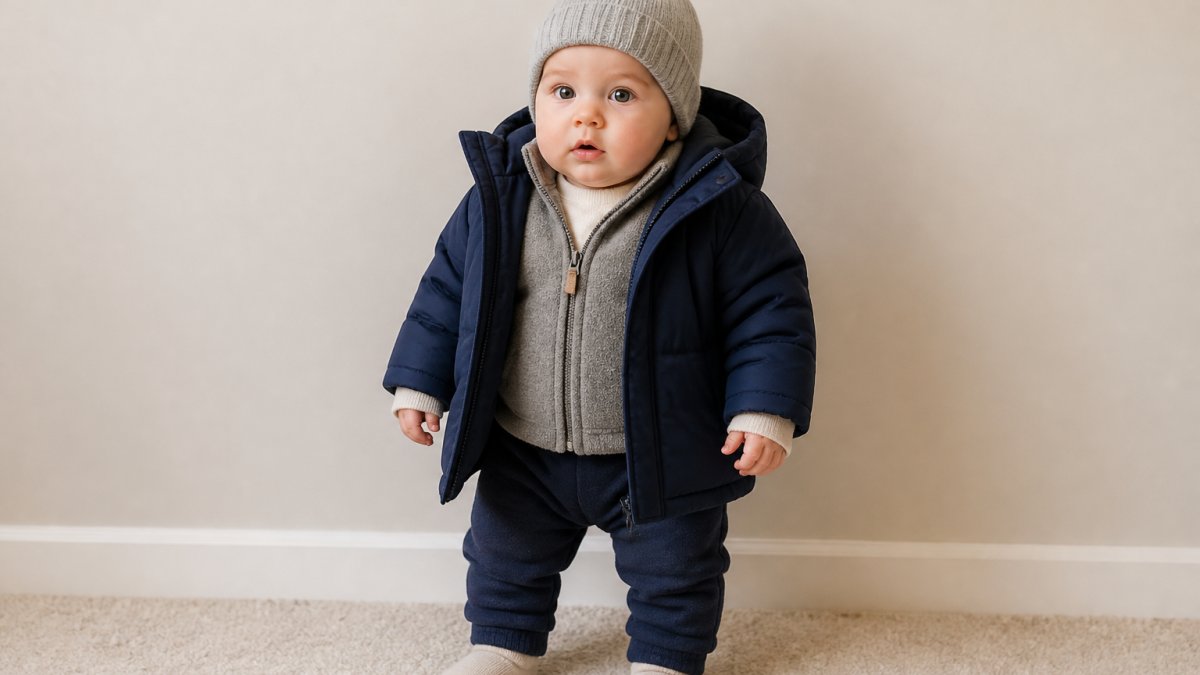
Quick-Reference Layering Chart
| Temperature Band | Typical Setting | Suggested Layers | Extras to Consider |
|---|---|---|---|
| Above 80°F | Outdoors, shaded | Single breathable base layer, short sleeves, loose fit | Wide-brim hat, shade, light muslin for sun cover |
| 75-80°F | Outdoors or warm room | Single base layer, short or long sleeves | Light cotton socks; skip the middle layer |
| 68-75°F | Typical heated or cooled home | Base layer plus light cardigan or cotton romper | Thin socks; add a light sleep sack for sleep |
| 61-68°F | Cool room or mild outdoor day | Base layer plus one middle layer (cotton sweater, light fleece) | Light hat outdoors; socks or soft booties |
| 50-61°F | Cool outdoor day | Base layer, middle layer, light outer layer | Hat, mittens, warm socks |
| 40-50°F | Cold outdoor day | Base layer, one to two middle layers, insulated outer layer | Hat, mittens, thick socks or booties |
| Below 40°F | Very cold outdoor day | Base layer, two middle layers, insulated outer layer | Hat, mittens, thick socks, booties; limit time outside |
How to Read the Chart
The chart assumes a healthy, full-term baby and short outings. Newborns, premature infants, and babies who are ill may need an extra layer or clinician-specific guidance, so check with your pediatric provider first.
The middle bands are narrow because that's where most daily life happens: a 70°F home, a car that warms up quickly, and a cool shop all sit inside the 61-75°F range, which is why middle layers matter most there.
Cold Weather Outfits (Below 50°F)
Cold weather requires the most layers: a breathable base layer like a cotton onesie, a fleece middle layer, and an insulated outer layer like a snow suit or padded jacket.
Consider the Baby Plus Velvet Warm Outfit for Kids for cold days. Add a hat to protect your baby's head, which loses heat quickly, plus mittens and warm socks.
Below 30°F, use two middle layers, a cotton sweater under a fleece layer works well, and make sure hands, feet, and head stay protected.
Cool Weather Outfits (50-65°F)
Cool weather needs fewer layers: a breathable base layer plus one middle layer like a cotton cardigan or lightweight fleece.
Watch your baby during cool weather. If your infant is sweating, remove a layer immediately, cool weather can fool parents into over-dressing, and your baby may warm up quickly once moving.
Mild Weather Outfits (65-75°F)
Mild weather often needs just a base layer and maybe a light cardigan. Many babies do fine in a single long-sleeve layer; short sleeves work if your baby runs warm.
The Spring And Autumn Baby Jumpsuit Pure Cotton Rompers is an excellent mild-weather option, letting your baby move freely while staying comfortable. Add a thin cardigan as the day cools.
Warm Weather Outfits (Above 75°F)
Warm weather calls for minimal layers. Many babies do well in just a breathable base layer. Short sleeves protect skin from sun while allowing air circulation.
Watch for overheating in warm weather. Babies overheat faster than adults. Keep your infant in shade when possible. Dress in light colors that reflect heat rather than absorb it.
Watch Out
Never dress your baby in heavy winter clothes during warm weather, even if you're indoors with air conditioning. Overheating poses real risks to infant health. Watch for sweating, flushed skin, and rapid breathing.
Pro Tip
Print or screenshot the chart and keep it near the changing table or in a diaper bag. A quick glance before you dress your baby is faster than trying to remember which band applies to a 68°F living room versus a 58°F stroller walk.
How to Tell if Baby Is Too Hot or Cold
Your baby can't tell you when they're uncomfortable, so watch for signs and check their temperature regularly by feeling their chest and neck.
Signs Your Baby Is Overheating
Overheating happens faster than most parents expect. Your baby's skin feels hot or damp, and sweating on the forehead or neck indicates overheating.
Spring And Autumn Baby Jumpsuit Pure Cotton Rompers →
Remove layers immediately if you notice these signs. Move your baby to a cooler area and let air circulate around your infant's body.
Signs Your Baby Is Too Cold
Cold babies show different signals. Your baby's skin feels cool to the touch, and the chest or neck area feels cold when you check.
Check your baby's hands and feet. Cold extremities suggest your baby needs another layer. Add a layer and recheck after 15 minutes.
Key Takeaway
The best way to know if your baby is comfortable is to check their chest and neck frequently. These areas tell you the truth about your baby's temperature better than hands or feet.
Safe Baby Clothing Layers for Car Seats
Car seats and layering require special care. Thick puffy jackets under car seat straps create a dangerous situation: in a crash, the jacket compresses, leaving gaps between your baby and the harness.
The safe approach is different. Use thin layers under the harness. Put the puffy jacket on after you buckle your baby in.
The Harness-Fit Test
Before you trust any layer under the harness, run a simple check. Buckle your baby in with the layer on and tighten the harness until you can only fit one finger between the strap and your baby's collarbone.
A common pattern is that a thin cotton onesie, a light fleece, or a single-layer long-sleeve bodysuit passes this test, while puffy jackets, snow suits, and thick sweaters fail it.
What to Wear Under the Harness
Keep the base layer thin and close-fitting. A cotton bodysuit or long-sleeve onesie is ideal. Add at most one thin middle layer, such as a light fleece or a cotton cardigan, and only if the car will be cold when you first get in. Skip the outer layer entirely under the harness.
Warming After Buckling
Once your baby is buckled and the harness is tight, add warmth on top. A blanket placed over the buckled harness, a car seat cover that goes over the shell, or a jacket worn backward over the arms are all common approaches. Never put a blanket or cover between your baby and the harness, and never tuck a blanket under your baby.
Managing the Indoor-to-Car Transition
A practical routine for a cold day looks like this: dress your baby in the thin base layer and one middle layer indoors, carry your baby to the car in a blanket or jacket that comes off before buckling, buckle and tighten the harness, then add the blanket or cover over the harness.
This routine keeps the harness safe and prevents the common mistake of leaving a baby in a puffy jacket for the whole trip because it is easier than taking it off in a cold garage.
Watch Out
Never use a car seat insert, bunting, or thick blanket that did not come with the car seat unless the car seat manufacturer explicitly permits it. Aftermarket products can interfere with harness fit and are not crash-tested with your seat.
Key Takeaway
The harness-fit test is the single most useful check for car-seat layering: if you can pinch slack at the shoulders after re-buckling without re-tightening, the layer is too bulky to wear under the harness.
Baby Sleep Clothing by Room Temperature
Sleep clothing needs different thinking than daytime clothes. Your baby can't adjust position easily during sleep.
Use our Infant Sleepwear Temperature Guide to match sleep clothing to your room temperature.
Never use blankets, pillows, or bumpers in the crib (Safe Sleep). These create suffocation risks.
Adding and Removing Layers as Conditions Change
The real skill in layering is knowing when to adjust. Temperature changes throughout the day. Your baby's activity level changes. You need to respond to these shifts.
Transitioning Between Indoors and Outdoors
Moving between environments requires quick adjustments. Your home might be 72°F while outside is 55°F. Your baby needs an extra layer for the outdoors.
Don't wait until your baby is uncomfortable. Check the weather before you go out. Add a layer before you leave. You can always remove it if your baby seems too warm.
Adjusting Layers During the Day
Check your baby every couple of hours. Feel your baby's chest and neck. Adjust layers based on what you find.
Watch your baby's behavior too. Fussiness might mean discomfort from temperature. Excessive sleepiness could indicate your baby is too warm. Active play suggests your baby feels good.
| Time of Day | Typical Action | What to Check |
|---|---|---|
| Morning | Add layers for cooler temps | Chest temperature |
| Midday | Remove layers as it warms | Sweating or flushed skin |
| Evening | Add layers as temps drop | Neck and hands |
| Before sleep | Use appropriate sleep sack | Room temperature |
Protecting Extremities: Hats, Mittens, Socks, and Feet
Your baby's head, hands, and feet need special attention. These areas lose heat fastest.
Hats protect your baby's head and ears. Choose hats that fit snugly without being tight.
Our Baby Cloth Shoes Simple Baby Indoor Non Slip Toddler Shoes provide safe foot protection indoors.
Check your baby's extremities frequently. Cold hands and feet mean your baby needs more layers.
Frequently Asked Questions
How many layers should a baby wear in changing weather?
Use the one-more-layer-than-an-adult guideline as your foundation. If you're wearing two layers, dress your baby in three. Start with a breathable cotton or bamboo base layer, add a middle insulation layer like fleece or a lightweight sweater, and finish with a protective outer layer for wind and rain. Adjust based on your baby's activity level and the specific temperature, active babies generate more body heat than sleeping infants.
What should a baby wear outside when the weather changes?
Dress your baby in layers you can easily add or remove. In cool weather (50-65°F), use a long-sleeve cotton bodysuit, a cardigan or sweater, and a light jacket. In cold weather (below 50°F), add a fleece layer and ensure hands, feet, and head are covered with mittens, socks, and a hat. Check your baby's neck or back frequently, if they feel warm or clammy, remove a layer immediately. Bring an extra layer in your diaper bag for rapid temperature shifts.
How do I know if my baby is too hot or cold?
Feel your baby's neck, chest, or back, not their hands or feet, which are naturally cooler. If the skin is hot, sweaty, or clammy, your baby is overheating; remove a layer and move to a cooler area. If the skin feels cool or cold, add a layer. Watch for behavioral signs: a cold baby may be fussy, sleepy, or have reduced activity; an overheated baby may be flushed, restless, or have a rapid heartbeat. Trust your instinct and adjust clothing frequently.
What should my baby wear to sleep when the room temperature changes?
For safe sleep, use a sleep sack or wearable blanket instead of loose blankets. In a 68-72°F room, a thin sleep sack over a long-sleeve bodysuit is usually adequate. In cooler rooms (below 68°F), choose a thicker sleep sack or add a long-sleeve pajama underneath. In warmer rooms (above 75°F), use just a thin sleep sack or footed pajamas without additional layers. Avoid overheating, which increases the risk of sleep-related complications. Check your baby's temperature regularly during the night.
Dressing your baby for changing weather becomes easy once you understand layering. Start with the one-more-layer rule. Watch your baby's cues. Adjust as conditions change. Best Baby Care Outlet offers the breathable base layers, insulated middle layers, and protective outer layers you need to keep your baby comfortable all year. Check out our collection of carefully selected baby clothes designed for real parents and changing weather.


