

Cart
0
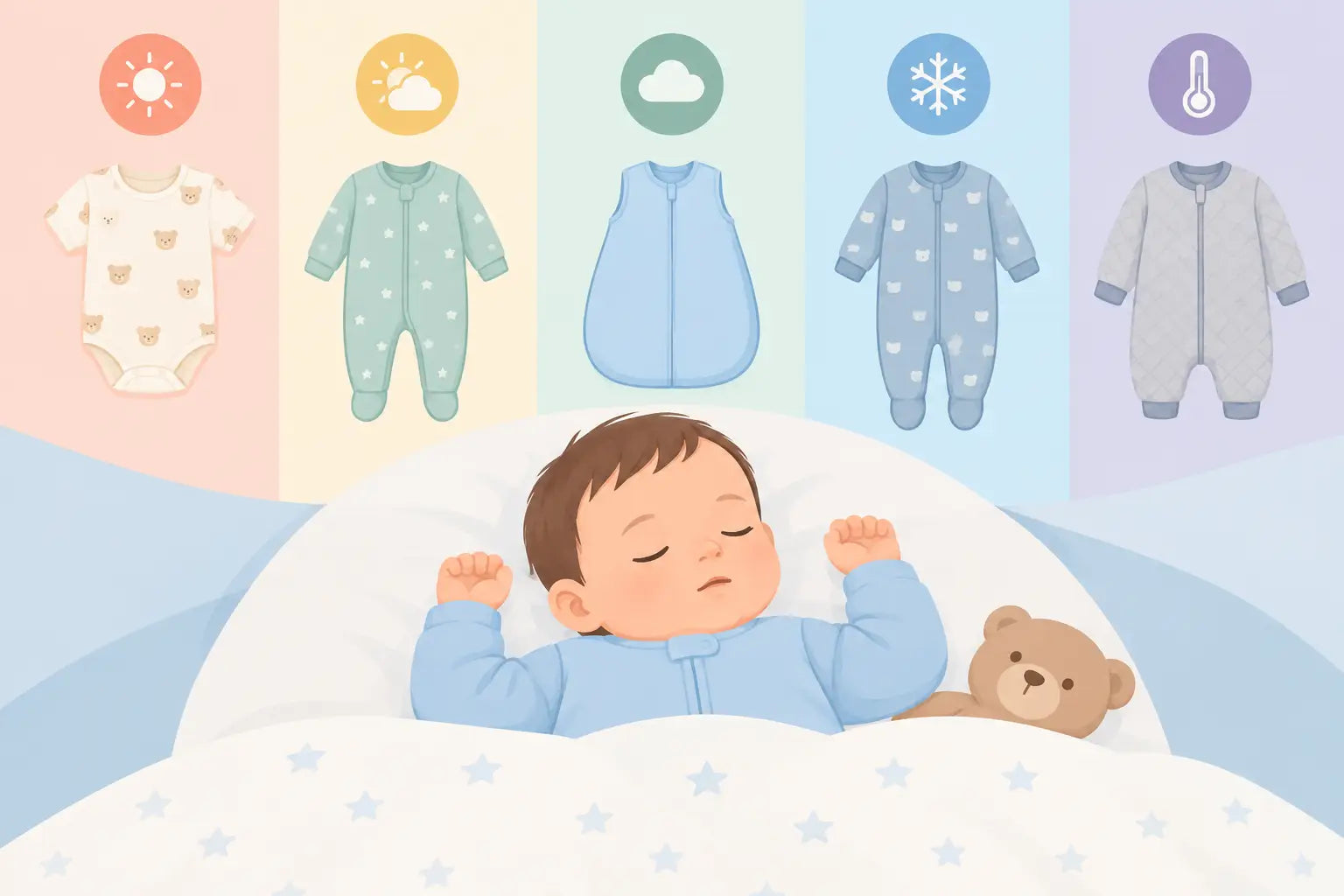
A baby who felt perfectly cozy at bedtime can feel too warm after a furnace cycle kicks on - or chilly when the early-morning air cools. That is why an infant sleepwear temperature guide is so helpful: it gives you a calm starting point when you are choosing pajamas, a sleep sack, and room layers for your little star. The goal is not to bundle baby up. It is to create a comfortably cool, safe sleep space where softness and simplicity work together. 💛
Start With the Room, Not the Season
Outdoor weather can be misleading. A snowy night may come with a warm nursery, while a humid summer evening may feel cool inside because of air conditioning. Check the temperature where baby actually sleeps, ideally near the crib and away from a vent, sunny window, or space heater.
Many families aim for a nursery around 68 to 72°F. That range is a useful reference, not a rule that requires constant worry. Your home, baby’s age, sleepwear fabric, and heating or cooling system can all change what feels comfortable. Focus on avoiding overheating, keeping the sleep area clear, and making small adjustments rather than adding several layers at once.
For safe sleep, place baby on their back on a firm, flat sleep surface with a fitted sheet. Keep loose blankets, quilts, pillows, stuffed animals, and hats out of the crib. A properly fitted wearable blanket or sleep sack is designed to provide warmth without loose bedding near baby’s face.
Infant Sleepwear Temperature Guide by Room Temperature
The suggestions below are a practical starting point for healthy infants sleeping indoors. Choose fitted sleepwear in the right size, and follow the manufacturer’s label for any sleep sack or wearable blanket. TOG ratings can be useful, but they are not standardized perfectly across every brand, so always pair the rating with the room temperature and your own baby’s comfort cues.
Above 75°F: Keep It Light
When the room is warm, a single lightweight layer is often enough. A short-sleeve cotton bodysuit or a lightweight, footless one-piece may work well. Some babies may be comfortable in just a diaper and a lightweight sleep sack, depending on the sack’s instructions and the actual room temperature.
Breathable cotton is a parent favorite for warm nights because it feels soft and allows air to move more easily than heavy synthetic fabrics. Skip hats and thick socks for sleep. A sweaty neck, damp hair, flushed cheeks, fast breathing, or a hot chest can mean baby needs a lighter layer or a cooler room.
70 to 74°F: Simple Pajamas Often Work
This is a common indoor sleep range. Many babies do well in a lightweight cotton footed pajama or a long-sleeve bodysuit with a light sleep sack. If your baby tends to run warm, a short-sleeve bodysuit with a light wearable blanket may be plenty.
Footed pajamas can be wonderfully convenient, especially for babies who kick off socks. Just make sure the fit is snug but not restrictive, with no loose fabric around the face or neck. Soft zippers with a protective chin tab can also make late-night diaper changes easier for everyone.
65 to 69°F: Add One Thoughtful Layer
A room in the upper 60s often calls for long-sleeve cotton pajamas and a medium-weight sleep sack. A footed sleeper can be a cozy choice, particularly for newborns and younger babies who are not moving around much during sleep.
This is where parents sometimes reach for an extra blanket. A wearable blanket is the safer choice for an infant’s crib. It stays in place while baby sleeps and removes the concern of loose fabric shifting over their face.
Below 65°F: Warm the Space Before Over-Layering
If the nursery regularly drops below 65°F, first consider whether the room itself can be warmed safely. Adjusting the thermostat, sealing drafts, or moving the crib away from a cold window may be more effective than adding heavy sleepwear.
For a cool room, long-sleeve pajamas with a warmer sleep sack may be appropriate when used according to its label. Avoid stacking multiple thick layers, using weighted products, or placing a loose blanket over baby. Overheating can be hard to spot beneath bulky clothing, and heavy layers can make it harder for baby to move comfortably.
How to Check Whether Baby Is Comfortable
Cold hands and feet are not the best indicators. Tiny hands are often cool because circulation is still developing, even when the rest of the body is comfortable. Instead, gently feel the back of baby’s neck, upper chest, or tummy.
Warm and dry usually means the layers are working well. If baby’s neck or chest feels sweaty, very hot, or clammy, remove a layer and reassess the room. If their core feels cool, consider one light adjustment, such as switching from a bodysuit to a footed sleeper or choosing a slightly warmer sleep sack.
Fussiness alone does not always mean baby is cold or hot. Hunger, a wet diaper, gas, illness, and normal sleep transitions can all cause waking. Look at the whole picture before changing the sleep setup night after night.
Choose Fabrics That Support Comfortable Sleep
The softest choice is not always the warmest one, and the warmest choice is not always best for your baby’s room. Cotton is a versatile everyday fabric because it is gentle, breathable, and easy to wash. Lightweight cotton rompers and pajamas are especially useful for warmer homes and summer sleep.
For cooler rooms, cotton layers paired with a suitable sleep sack give you flexibility. Fleece can feel cozy in a genuinely cool nursery, but it may be too warm in a room that is already heated. Watch for fabric that traps heat, especially if your baby sleeps in a footed sleeper and a sleep sack together.
Avoid clothing with loose ties, dangling decorations, oversized hoods, or bulky accessories at bedtime. The sweetest sleepwear is the kind that lets baby rest safely and lets you handle a middle-of-the-night diaper change without a struggle.
Newborns, Older Babies, and Changing Sleep Needs
Newborns can have a harder time regulating body temperature, which is one reason parents often feel tempted to add extra layers. A useful rule of thumb is to dress baby in about one more light layer than an adult would wear in the same room. Still, this is only a starting point. A warm sleeper may need less, while a cooler nursery may call for a wearable blanket.
As babies grow, their sleep habits change. A rolling baby needs a sleep sack that allows free movement and fits correctly around the neck and arms. Stop swaddling as soon as baby shows signs of trying to roll. At that point, transition to an arms-free wearable blanket or sleep sack rather than using a swaddle with the arms pinned in.
If your baby was born prematurely, has a health condition, or seems unusually sleepy, overheated, or unwell, ask your pediatrician for individualized guidance. Your care team knows your baby’s needs best.
Make Bedtime Adjustments Easy
A small sleepwear rotation can save a lot of late-night guessing. Keep a few clean basics ready: lightweight bodysuits, long-sleeve sleepers, and sleep sacks in weights that suit your home. Then you can respond to a surprise cold front, a warmer-than-usual room, or an accident without turning bedtime into a full laundry emergency.
It also helps to check the nursery before you start the bedtime routine. Set the room temperature, choose the layer, and then enjoy the quiet parts: a fresh diaper, a cuddle, a soft goodnight. At Best Baby Care Outlet, we believe those simple details are part of caring for little stars.
Your baby does not need a perfectly calculated outfit every night. They need a safe sleep space, a comfortable core temperature, and a loving caregiver who notices the small cues. Start light, check their neck or chest, and make one gentle change when needed - happy babies, happy parents. 🌙

