

Cart
0
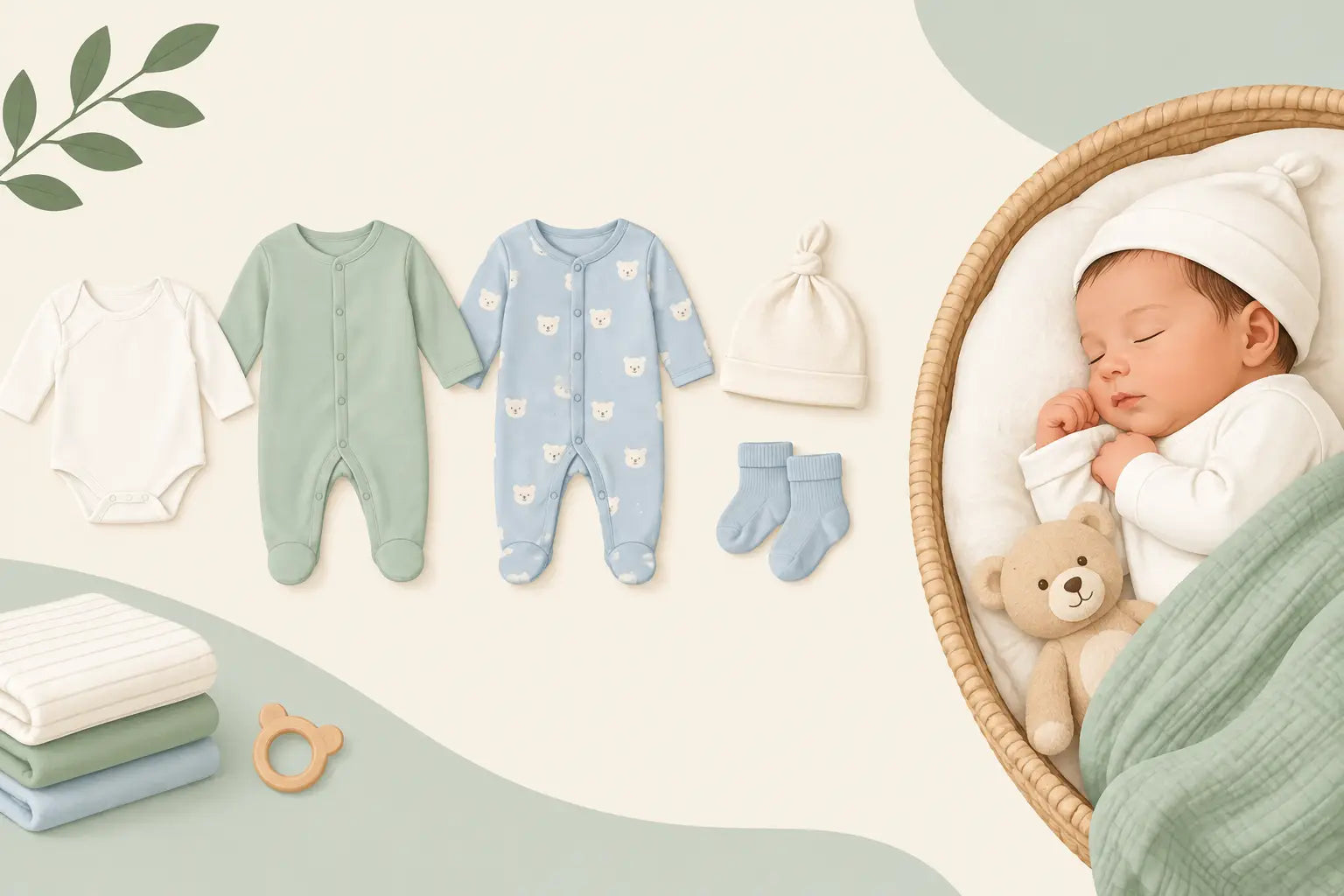
A tiny newborn onesie can look impossibly small until you meet the baby it is meant for. Then, even a sweet outfit labeled “newborn” may fit perfectly, feel roomy, or be skipped altogether. This newborn clothing size guide helps you choose with more confidence, so your little star has soft, comfortable layers ready from the very first cuddle. 💛
The short answer is that clothing labels are a starting point, not a promise. Babies arrive at different weights and lengths, and every brand cuts its clothing a little differently. Rather than stocking up on one size, build a flexible first wardrobe with a small mix of newborn and 0-3 month pieces.
Newborn Clothing Size Guide: Start With Weight and Length
Most US baby clothing is labeled by age, but weight and length give a more useful picture of fit. Check the product’s size chart whenever one is available, especially for sleepwear, rompers, and footed pajamas where length can make a noticeable difference.
| Common label | Typical baby weight | Typical baby length | What it often fits |
|---|---:|---:|---|
| Preemie (P) | Up to about 5 lbs. | Up to about 17 in. | Babies born early or very small |
| Newborn (NB) | About 5-8 lbs. | About 17-21 in. | Many full-term newborns in the early days |
| 0-3 months | About 8-12 lbs. | About 21-24 in. | Babies who outgrow newborn sizes or are born larger |
| 3-6 months | About 12-16 lbs. | About 24-26 in. | The next step as your baby grows |
These ranges vary by manufacturer, so think of them as a helpful guide rather than a rule. A long, lean baby may need the next size for length while still having extra room through the body. A smaller baby may wear newborn clothing for several weeks. Your baby’s shape, growth rate, and the garment’s fabric all matter.
Why “Newborn” Does Not Mean the Same Thing Everywhere
Newborn sizing is one of those baby basics that sounds simple until you start comparing clothes. One brand’s newborn bodysuit may be trim and short, while another has roomier shoulders and a longer torso. Cotton can also shrink a bit after the first wash, particularly if it is dried with heat.
This is why it helps to keep tags on a few pieces until you know what fits. Try one bodysuit, one sleeper, and one outfit from each size after baby arrives. If the neckline sits gently, the snaps close without pulling, and your baby can bend and stretch freely, you have found a good fit.
Fit should always feel comfortable, never restrictive. Avoid clothing that leaves deep red marks around the wrists, ankles, tummy, or thighs. On the other hand, clothing that is overly loose can bunch under swaddles, car seat straps, or sleep layers. Softness you can trust also means a fit that lets baby move naturally.
Expect growth spurts, not a straight line
Some babies wear newborn clothes for a month or more. Others need 0-3 month clothing right away. Both are completely normal. During the first few months, babies can outgrow a size quickly, then seem to stay in the next size longer.
Instead of buying a large pile in advance, choose enough for regular changes and laundry. You can always add more once you know whether your baby is petite, long, broad-shouldered, or growing fast. This approach saves closet space and leaves room for those irresistible outfits you discover later.
How Many Newborn Clothes Do You Really Need?
For most families, a practical newborn capsule wardrobe is more useful than a drawer packed with special-occasion pieces. Babies may need several changes in a day because of spit-up, diaper leaks, and surprise messes. Still, you do not need dozens of every item, especially if you plan to wash clothes every few days.
A comfortable starting point includes six to 10 bodysuits, five to eight footed sleepers or rompers, and a few easy daytime outfits. Add two or three lightweight hats for cool weather, several pairs of socks if your sleepers are footless, and gentle layers such as cardigans or pants when the season calls for them. If you expect frequent laundry delays, have twins, or simply prefer more breathing room between loads, choose the higher end of those ranges.
Prioritize pieces that make diaper changes easier. Two-way zippers, envelope necklines, snap closures, and stretchy fabric can make those middle-of-the-night changes feel much less complicated. For early days at home, comfort usually wins over elaborate outfits, and that is more than okay. Happy babies, happy parents. 😊
A smart size mix for a baby shower or hospital bag
If you are shopping before baby arrives, buy fewer newborn items than 0-3 month items. A good balance is a handful of newborn basics plus a larger selection of 0-3 month essentials. That way, you are prepared whether baby is small enough for newborn clothing or comes home ready for the next size.
For the hospital bag, pack one newborn outfit and one 0-3 month outfit for the trip home. Consider the weather, too. A summer baby may only need a breathable cotton bodysuit under a light blanket, while a winter baby will benefit from warm layers that are easy to remove once the car is heated. Bulky outerwear should not go under car seat harness straps. Dress baby in thinner layers, secure the harness snugly, then place a blanket over the straps if needed.
Check Fit at Every Change
You do not need to measure your baby daily, but a quick fit check during dressing makes a big difference. Look at the shoulders, neckline, torso length, and feet. If snaps pop open, the zipper pulls tightly, toes press against the ends of a sleeper, or the neckline is difficult to get over baby’s head, it is time to size up.
A size up is often the better choice for pajamas and play clothes when baby is between sizes, provided the garment does not become so loose that it rides up or tangles. For sleepwear, follow the manufacturer’s fit guidance. Some infant sleep garments are designed to fit more closely for safety, so do not intentionally size up without checking the label and product instructions.
Pay attention to fabric, too. Cotton is breathable and wonderfully soft for everyday wear, while a little stretch can make a bodysuit easier to put on. If your baby has sensitive skin, choose smooth seams, soft tags or tag-free designs, and fabrics that feel gentle against the skin. Wash new clothing before wear with a mild detergent, then monitor how your baby’s skin responds.
Seasonal Layers Can Change Your Size Needs
The same baby may need different clothing combinations in July and January. In warm weather, breathable short-sleeve bodysuits, lightweight rompers, and a sun hat for outdoor time are often enough. Keep babies out of direct sun whenever possible, and use shade rather than relying on clothing alone.
In cooler months, layering is more practical than choosing one heavy outfit. Start with a bodysuit, add a footed sleeper or pants, and use a light sweater or jacket for brief outdoor trips. Babies generally need one more light layer than a comfortable adult in the same environment, but check their chest or back rather than their hands and feet to see whether they feel too warm or chilly.
For sleep, keep the crib clear of loose blankets, plush toys, and extra layers. Choose sleepwear appropriate for the room temperature and follow safe sleep recommendations from your child’s healthcare provider. A wearable blanket in the right size can be a cozy alternative when additional warmth is needed.
Make the First Wardrobe Work Harder
The most-loved newborn clothes are usually the ones that wash well, feel soft, and go on easily when everyone is tired. Choose mix-and-match colors and simple prints so bodysuits, pants, and layers work together. A few cheerful pieces can still make everyday dressing feel special, without requiring a full outfit change after every tiny mess.
At Best Baby Care Outlet, we believe every little detail should support calmer routines and happier cuddles. Look for practical features alongside adorable style: gentle fabrics, easy closures, flexible waistbands, and room to wiggle. Those small choices add up during feedings, diaper changes, naps, and all the beautiful in-between moments.
Your baby will tell you more than any tag can. Start with a small, cozy range of sizes, notice what fits comfortably, and let the next growth spurt guide your shopping. The right clothes are simply the ones that keep your little one snug, free to move, and ready for another day of love in every detail.

