

Cart
0
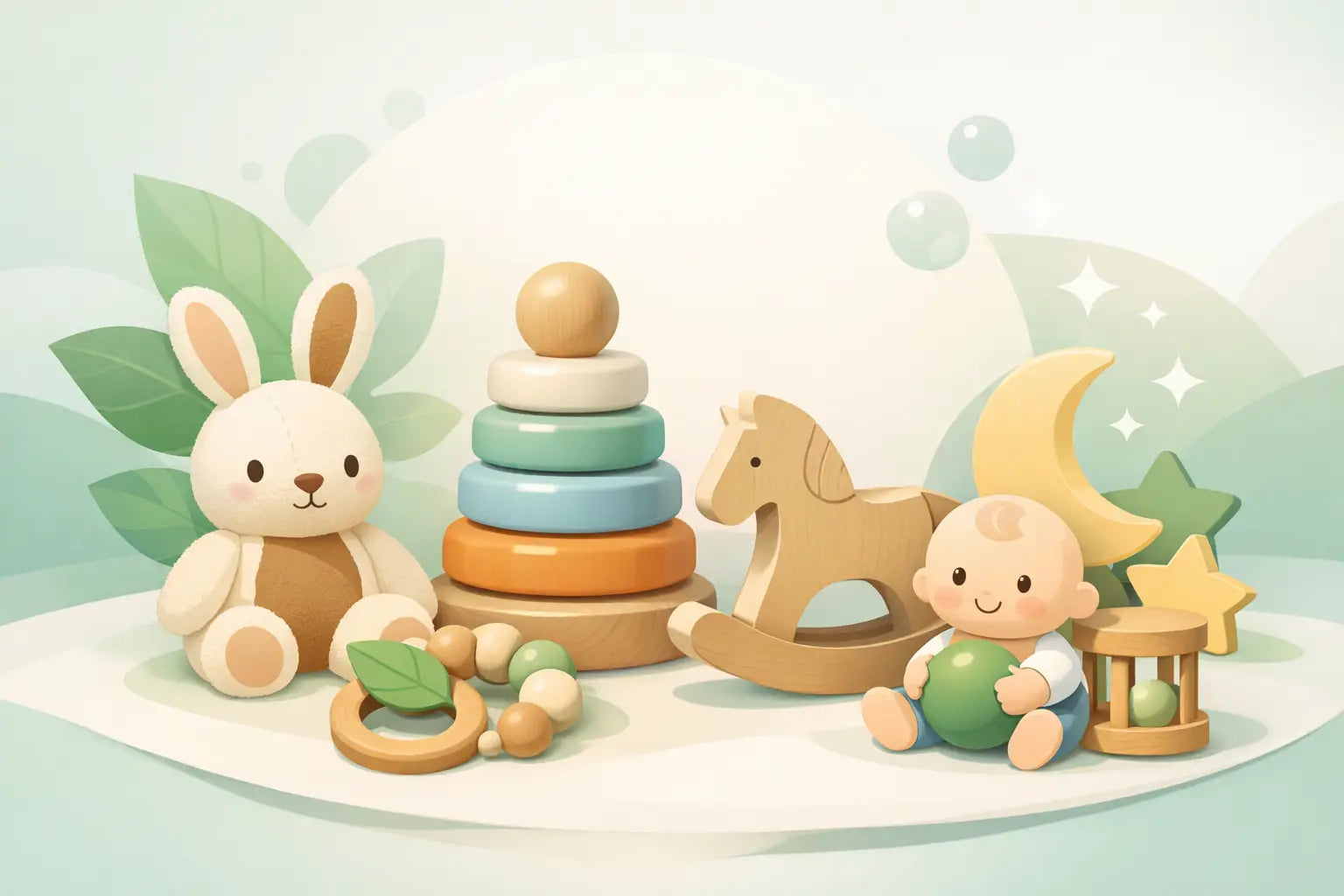
A baby does not care whether a toy looks perfectly styled on a nursery shelf. They care whether it rattles, rolls, squishes, stacks, or feels good to chew while their curious little hands get to work. For parents, though, choosing non toxic baby toy materials can bring a lot of questions. What is actually safe to mouth? Does “natural” always mean better? And which details deserve a closer look before a favorite new toy comes home?
The reassuring news is that you do not need a chemistry degree to shop thoughtfully. A few material basics, clear product information, and a little common sense can help you choose playthings that support happy, everyday discovery. 🧸
Why Toy Materials Matter So Much for Babies
Babies explore with their whole bodies, especially their mouths. A soft block may be chewed during tummy time, a teether may spend hours in tiny hands, and a bath toy may be used in warm water again and again. That makes material choice more meaningful than it may be for an older child’s puzzle or board game.
The goal is not to panic over every plastic toy or assume a higher price automatically means a safer one. Instead, look for toys made for a baby’s age and intended use, with materials that are clearly identified and finishes that are designed with little ones in mind. A well-made toy should also hold up to normal play without cracking, peeling, splintering, or shedding small pieces.
Safety includes more than the material itself. Size, construction, loose parts, cords, magnets, batteries, and age recommendations matter just as much. Even a thoughtfully chosen wooden or silicone toy is not the right fit if it is too small for a mouthing baby or has parts that can come loose.
Non Toxic Baby Toy Materials to Look For
There is no single perfect toy material for every stage or activity. Silicone works beautifully for teethers, while cotton is a cozy choice for soft toys and wooden toys can offer satisfying texture and durability. The best option depends on how your child will use it.
Food-Grade Silicone
Food-grade silicone is a favorite for baby teethers, stacking cups, bath toys, and sensory toys because it is soft, flexible, and easy to wipe clean. Quality silicone is often described as BPA-free and free from phthalates, PVC, and lead. These are useful details to look for, especially for toys that will be chewed regularly.
Silicone is not indestructible, so inspect it often for tears, deep bite marks, or damage around seams. It can also attract lint, which is normal and easy to manage with regular washing. For teething babies, a simple one-piece silicone design is often easier to clean than a toy with many tiny grooves or attached parts.
Natural Rubber
Natural rubber can be a lovely option for soft, squeezable toys and teethers. It has a gentle, springy feel that many babies enjoy, and it is often used in toys with simple shapes made for grasping and mouthing.
There are trade-offs. Natural rubber may have a mild scent at first, and it can wear down more quickly than silicone if it is exposed to heat, direct sunlight, or harsh cleaners. It is also not a fit for every family, particularly if a child has a known latex allergy or a pediatrician has advised avoiding latex products. Check the product description carefully because “rubber” can refer to different materials.
Solid Wood With Baby-Safe Finishes
Wooden toys bring warmth, weight, and texture to playtime. Smooth wooden rattles, grasping toys, stacking rings, and simple vehicles can become long-lasting favorites. Look for solid wood that is sanded smooth, with no sharp edges, cracks, or rough splinters.
The finish matters as much as the wood. Choose toys described as using water-based, non-toxic paints or stains, and avoid items with paint that is chipping, sticky, or strongly scented. “Unfinished” wood is not always automatically better, either. Some unfinished toys are harder to clean or may absorb moisture. A safe, well-applied finish can help a wooden toy stay cleaner during everyday use.
Organic Cotton and Other Soft Textiles
For cuddle toys, cloth books, soft blocks, and baby dolls, cotton is a comforting choice. Organic cotton can be especially appealing to parents who want to reduce exposure to certain agricultural chemicals used during fiber production. It is soft against delicate skin and easy to wash when a toy has had an enthusiastic day of drooling, snacking, and being carried everywhere.
Still, the filling and decorations deserve attention. Look for securely stitched details rather than buttons, beads, or plastic eyes on toys intended for babies. If a stuffed animal has long fur, ribbons, or loose accessories, save it for supervised play or choose a simpler style for the crib and stroller.
Safer Plastics for Everyday Play
Plastic toys are common because they are lightweight, colorful, and often easy to sanitize. They do not need to be avoided across the board. When choosing plastic toys for babies, look for clear material information and labels such as BPA-free and phthalate-free. Toys made from polypropylene or polyethylene are often used for baby products because they are durable and practical for daily play.
Skip older, damaged, or unidentified plastic toys, especially if they are brittle, have peeling paint, or carry a strong chemical smell. Vintage toys can be charming, but they may not meet current safety expectations. Newer toys from transparent manufacturers are usually the easier choice for babies who will chew and mouth them.
Labels That Help, and Claims That Need Context
Words like “natural,” “eco-friendly,” and “chemical-free” can sound reassuring, but they do not tell the full story on their own. Every material is made of chemicals, including wood and cotton. What parents really need is specific, useful information about what a toy is made from, how it is finished, and which substances it is designed to avoid.
Helpful product details include an age range, care instructions, material composition, and statements that the toy meets applicable US toy safety requirements. For a teether, food-grade silicone or natural rubber details are more useful than a vague “safe for baby” claim. For a wooden toy, knowing the type of paint or finish is more helpful than seeing only the word “natural.”
A short product description is not always a red flag, but it is reasonable to pause when a seller cannot identify the material at all. Parents deserve enough information to make a confident choice for their little star.
Match the Material to the Way Your Baby Plays
A practical toy collection does not need to be huge. It simply needs to fit your baby’s current stage. A newborn may enjoy a soft cotton sensory toy during supervised awake time. A teething baby may get more use from a one-piece silicone teether. An older baby working on hand-eye coordination may love smooth wooden stackers or larger plastic nesting cups.
Think about cleaning before you buy. Toys used during meals, bath time, and teething need regular care, so simple shapes are a gift to busy parents. Follow the maker’s cleaning directions instead of assuming every toy can go in the dishwasher, washing machine, or sterilizer. Hot water, soaking, and harsh cleaners can shorten the life of natural rubber, wood, and some fabric items.
It also helps to rotate toys. Fewer options out at once can make playtime feel fresh, while giving you an easy chance to inspect each item. Check for loose seams, cracked surfaces, exposed stuffing, peeling paint, and small parts before handing a toy back to your child.
A Gentle Shopping Checklist for Parents
When comparing toys, focus on the details that affect real life: the baby’s age, whether they are likely to mouth it, how easily it cleans, and whether the material and finish are clearly stated. Choose a toy that feels sturdy in your hands, has no sharp edges or loose pieces, and is appropriately sized for your child.
For gifts, simple is often best. A soft organic cotton rattle, smooth wooden stacker, or easy-clean silicone teether can be both sweet and genuinely useful. These are the kinds of everyday essentials that make little moments brighter without adding clutter to a new family’s home.
At Best Baby Care Outlet, we believe care lives in the small choices: a soft texture, a secure seam, a toy that is ready for another round of giggles. Choose materials with care, inspect toys often, and let your baby do what they do best - play, learn, and fill the room with joy. 💛

