

Cart
0
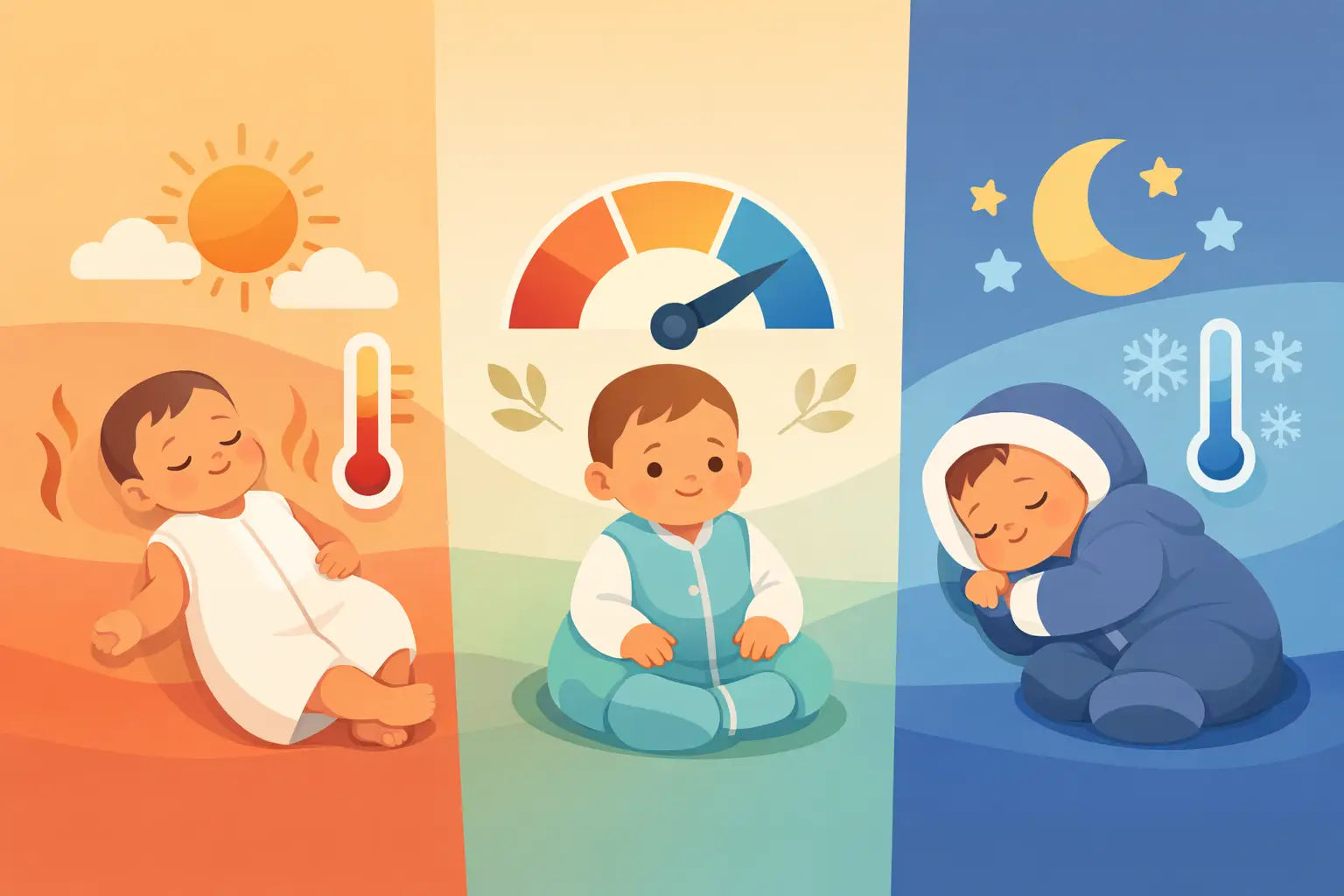
A nursery can feel perfectly comfortable to an adult and still leave a parent wondering, “Is my baby too warm?” This wearable blanket temperature guide takes the guesswork out of bedtime by helping you pair your little star’s sleepwear with the actual room temperature, not the weather outside. ☁️
A wearable blanket, often called a sleep sack, is designed to keep baby cozy without adding loose blankets to the crib. The right choice depends on the temperature in the room, the warmth rating of the product, what baby is wearing underneath, and your child’s own comfort cues. There is no single outfit that suits every baby or every home, but a thoughtful routine can make sleep feel safer and simpler.
Start With Safe Sleep, Then Add Warmth
For babies under 12 months, the safest sleep space is a firm, flat crib, bassinet, or play yard with a fitted sheet and no loose bedding. That means no loose blankets, comforters, pillows, stuffed animals, or hats in the sleep area. A properly fitted wearable blanket can be a helpful alternative to a loose blanket because it stays on baby while allowing their legs to move freely.
Always choose a wearable blanket that fits your baby’s current weight and size according to the manufacturer’s instructions. The neck opening should not be large enough for baby’s face to slip inside, and the arm openings should fit securely without restricting movement. Check zippers, snaps, and seams before each use, especially after frequent washing.
If you have been swaddling your baby, the transition matters. Stop swaddling as soon as your baby shows signs of trying to roll, even if they have not rolled all the way over yet. At that point, an arms-out wearable blanket is usually the more appropriate sleepwear option. Never use weighted sleep sacks, weighted swaddles, or products that place added weight on baby’s chest or body.
How to Use This Wearable Blanket Temperature Guide
Before bedtime, check the temperature where your baby actually sleeps. A nursery monitor with a room thermometer is useful, but a basic indoor thermometer works well too. Do not rely only on your home’s thermostat, since upstairs rooms, rooms near windows, and nurseries with direct afternoon sun can run warmer or cooler.
Next, look at the wearable blanket’s warmth rating. Many brands use TOG, short for Thermal Overall Grade, to describe how much insulation a fabric provides. A lower TOG is lighter and better for warm rooms, while a higher TOG is warmer for cool rooms. Not every brand uses the same ratings or materials, so treat TOG as a starting point rather than a promise that every baby will feel the same.
The general goal is comfortable warmth, not bundling. A baby who is overdressed can overheat, while a baby in too few layers may wake more often from feeling chilly. Soft, breathable cotton layers are a dependable choice for many families because they are easy to add, remove, and wash.
Room Temperature and Sleepwear Suggestions
Use these combinations as a flexible starting point. Follow the specific instructions on your sleep sack label, and adjust based on your baby’s comfort.
| Nursery temperature | Wearable blanket choice | What baby might wear underneath |
|---|---|---|
| Below 68°F | Warmer sleep sack, often around 2.5 TOG if the product recommends it | Long-sleeve cotton bodysuit and footed pajamas |
| 68-72°F | Medium or warmer sleep sack, depending on your home and baby | Long-sleeve bodysuit with pajamas, or pajamas alone |
| 72-75°F | Lightweight sleep sack, often around 0.5-1.0 TOG | Short-sleeve or long-sleeve cotton bodysuit |
| Above 75°F | Very lightweight sleep sack, if one is needed | A light cotton bodysuit or diaper, based on the manufacturer’s guidance |
These ranges overlap for a reason. A drafty 72°F room can feel different from a still, humid 72°F room. Some babies also naturally sleep warmer than others. Start with one comfortable layer under the wearable blanket, then make small adjustments over a few nights instead of changing everything at once.
Check Baby’s Chest, Not Their Hands
Tiny hands and feet often feel cool, even when baby is perfectly comfortable. They are not the best indicator of whether your child needs another layer. Instead, gently feel the back of baby’s neck, chest, or upper back when you check on them.
Warm and dry usually means the outfit is working well. Sweaty hair, damp skin, flushed cheeks, rapid breathing, or a hot chest may mean baby is too warm and needs a lighter layer. Cool skin on the chest or a consistently chilly neck may suggest that a warmer pajama layer or a warmer wearable blanket would be more comfortable.
Try not to make changes just because baby wakes overnight. Babies wake for many reasons, including hunger, a wet diaper, teething, developmental changes, or simply needing reassurance. Temperature is worth checking, but it is not always the reason for a restless night.
Choose Fabrics That Support Comfortable Sleep
The fabric of a wearable blanket matters as much as its rating. Lightweight cotton is a favorite for warm weather and heated homes because it feels soft and breathable against delicate skin. Cotton blends can be practical too, especially when they hold up well to frequent laundry days.
Quilted or fleece-lined options can offer more warmth in cooler bedrooms, but they should be used with fewer layers underneath. A thicker sleep sack plus thick pajamas can become too warm surprisingly quickly. Skip hats, hooded sleepwear, scarves, and bulky accessories at bedtime, since these can trap heat or shift around baby’s face.
For families building a simple sleepwear drawer, a few soft cotton bodysuits, footed pajamas, and one lightweight plus one warmer wearable blanket can cover many seasons. This approach keeps bedtime practical while giving you options when the heat, air conditioning, or outdoor temperatures change.
Adjust for Seasons, Travel, and Changing Babies
Your baby’s sleep setup may need a refresh as the seasons change. In summer, a room can stay warm long after sunset, especially in apartments or homes with uneven air conditioning. In winter, a nursery close to an exterior wall or window may feel cooler than the rest of the house. Checking the room before bed is more useful than dressing baby based on the calendar.
Travel deserves extra attention too. A hotel room, grandparent’s home, or vacation rental may have unfamiliar heating and cooling. Pack a lightweight layer and a warmer option when possible, then choose based on the room once you arrive. Familiar pajamas and a soft, properly fitted wearable blanket can bring a little bedtime comfort wherever your family is resting.
As babies grow, their needs and movement change. Recheck size guidance regularly, especially if your little one is moving into a new clothing size or becoming more active in the crib. A snug, safe fit around the shoulders and chest should always come before getting extra use from a favorite sleep sack.
When to Ask Your Pediatrician
If your baby was born prematurely, has a health condition, has trouble regulating body temperature, or you have concerns about their breathing during sleep, ask your pediatrician for individualized guidance. It is also wise to call for medical advice if your baby seems unusually lethargic, has persistent sweating, feels very hot or cold, or shows signs of illness.
Your instincts matter. You know your baby’s usual sleep patterns better than anyone, and a simple bedtime check can help you notice when something feels different.
A cozy sleep routine does not have to be complicated. With a safe sleep space, breathable layers, and a wearable blanket that matches the nursery temperature, you can tuck in your little star with more confidence and enjoy those tender goodnight moments. Happy babies, happy parents. 💛

