

Cart
0
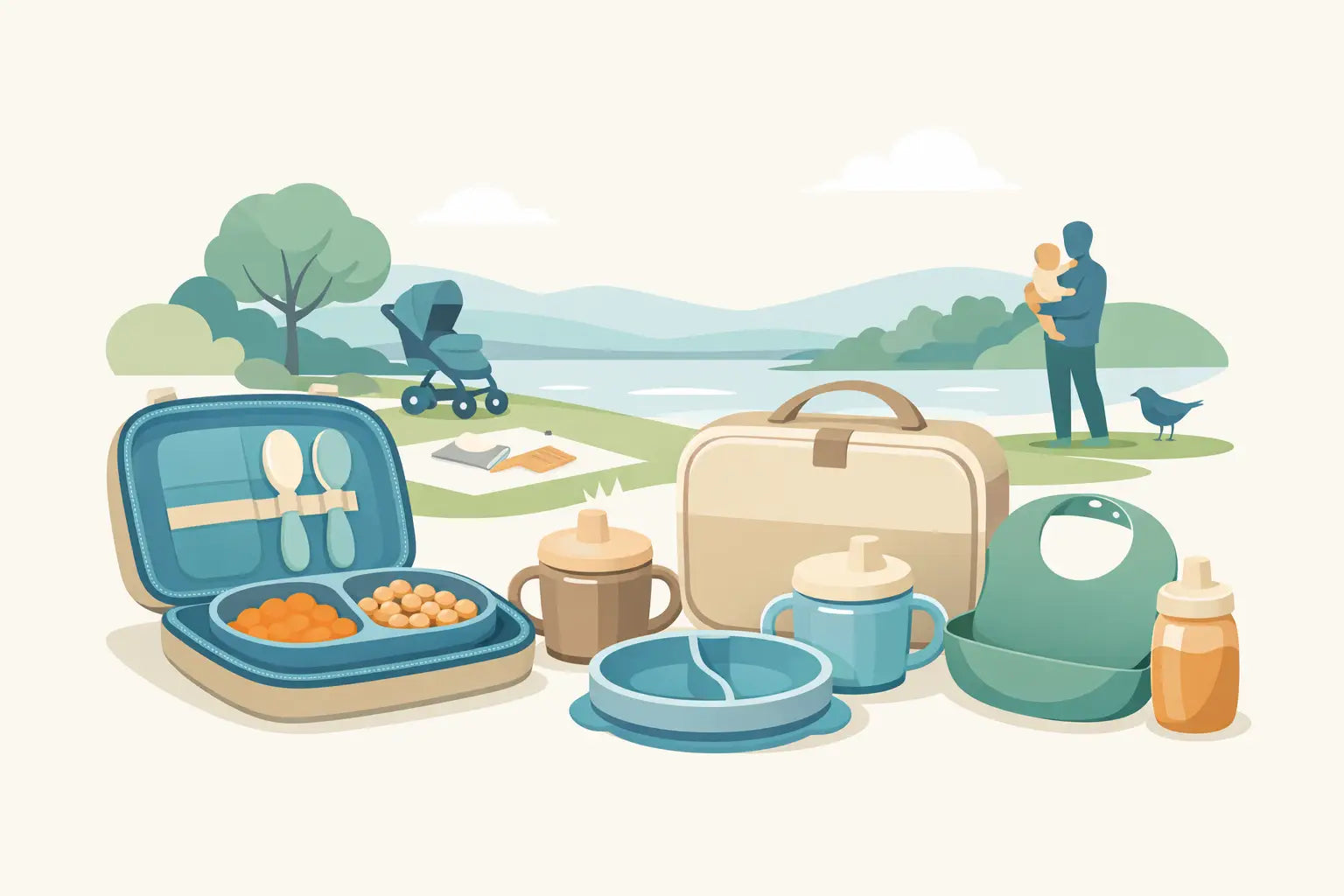
A hungry baby rarely waits for the car ride to end or the café table to clear. That is where a portable baby feeding set earns its place in the diaper bag. With a few thoughtfully chosen pieces close at hand, you can turn a snack break at the park, a restaurant lunch, or a long travel day into a calmer moment for everyone. Happy babies, happy parents. 😊
Portable feeding gear is not about packing your entire kitchen. It is about bringing the small essentials that help your little one eat comfortably while helping you manage spills, crumbs, and cleanup with more confidence.
What Makes a Portable Baby Feeding Set Worth Packing?
The best set supports the way your child eats right now. For an early self-feeder, that may mean a suction bowl, a soft silicone spoon, and a bib with a food-catching pocket. For an older baby who wants more independence, a divided plate, a training cup, and toddler-friendly utensils may make more sense.
Look first for materials that are designed for everyday baby meals. Food-grade silicone is a favorite for good reason: it is soft, flexible, easy to wipe down, and less likely to crack if it tumbles onto a restaurant floor. Lightweight plastic can also be practical, especially when you need a larger plate or snack container without adding bulk. Whatever material you choose, check that it is labeled BPA-free and follow the maker's age and care guidance.
Size matters just as much as material. A bowl that is wonderfully roomy at home can feel like a burden in a packed diaper bag. Compact pieces that nest together or fit inside a small travel pouch help keep your bag organized. Lids are especially helpful for carrying dry snacks, pre-portioned foods, or a half-finished meal back home.
The Essentials to Include for Meals Away From Home
A portable feeding setup should feel useful, not overstuffed. Most families can cover everyday outings with a small collection of dependable pieces.
A bib is often the first line of defense. Silicone pocket bibs catch dropped bites before they reach baby’s lap, stroller, or car seat. Fabric bibs can be softer for younger babies, but they usually need a spare once they are damp or messy. If your little one is eating purées or yogurt, a wipe-clean silicone option can save valuable time.
A suction bowl or plate can be a big help when your child is in the enthusiastic table-slapping stage. A strong base may stay in place on smooth, clean surfaces, giving small hands a better chance to practice scooping. Still, suction is not magic. It may not grip textured tables, uneven picnic benches, or surfaces with moisture underneath. It is best viewed as extra support, not a guarantee against every flip.
Bring a spoon that suits your baby’s current skills. A soft-tipped spoon is gentle for parent-led feeding, while a short, chunky handle is easier for a baby learning to self-feed. For finger foods, a small fork can be useful for older babies, though many families find one spoon and clean fingers are enough for a quick outing.
A spill-resistant cup or bottle completes the set. Water is often all you need for a short trip, but longer days may call for an insulated bottle cover or a separate container to help keep milk at a suitable temperature. Always prepare and store breast milk or formula according to safe handling guidance. A portable set makes serving easier, but it does not replace food-safety basics.
How to Pack a Portable Baby Feeding Set Without the Bulk
The secret is giving each item a job. Pack the feeding pieces together in a washable pouch or zip-top bag so you are not searching through diapers, toys, and extra outfits at mealtime. Place the clean bowl, utensils, and bib inside first, then keep a small cleaning cloth or wipes in an outside pocket for quick access.
For a simple meal, portion food before you leave. Soft fruit, shredded chicken, cooked vegetables, cereal, crackers, and age-appropriate snack foods are easier to serve when they are already in small containers. A sealed snack cup can be handy for dry foods, while a container with a tight lid helps with moist foods. If you are packing anything perishable, use an insulated bag with an ice pack and avoid leaving it in a warm car.
It also helps to carry one backup item that can solve several problems. A small muslin cloth, for example, can cover a shoulder during burping, clean up a light spill, or provide a quick clean spot beneath a bowl. For bigger messes, a wet bag keeps used bibs and utensils separate from the fresh items in your diaper bag.
Choosing a Set for Your Baby’s Feeding Stage
Your baby’s age is a helpful starting point, but feeding ability matters more than a number on the box. Babies develop at different speeds, and a set should meet your child where they are.
Starting solids
At the beginning, keep things gentle and simple. A small bowl, one soft spoon, and an easy-clean bib are usually enough. Babies may only eat a few tastes at first, so there is no need to pack a full collection of dishes. Choose pieces with smooth edges and handles that feel comfortable in your hand.
Building self-feeding skills
As babies start grabbing the spoon and exploring finger foods, durability and stability become more useful. A suction bowl, divided plate, and short-handled utensil can encourage participation without making every meal feel like a rescue mission. Expect messes. They are part of learning, and a good portable set simply makes them easier to handle.
Feeding an independent toddler
Toddlers often want their own plate, their own cup, and their own very firm opinion about both. A compact divided plate can keep foods separate for selective eaters, while a dependable straw cup may be more practical than an open cup on the go. Choose pieces that are easy for little hands to hold, but not so tiny that portions feel frustratingly small.
Features That Make Cleanup Less Stressful
A portable set should be easy to clean even when you do not have access to a sink. Smooth silicone surfaces, simple shapes, and minimal seams are your friends. Deep grooves, decorative textures, and complicated valves can trap food and take more effort to wash later.
Before you pack up, scrape leftover food into a trash can when possible and wipe pieces with a clean cloth or baby-safe wipe. Then seal everything in its pouch until you can wash it properly at home. Do not put damp, food-covered items loose in the diaper bag. That is how a quick snack stop becomes a mystery smell two days later.
When shopping, consider whether the items are dishwasher-safe if that fits your household routine. Hand-wash-only pieces can still be lovely, but they may be less convenient for families using feeding gear every day. The best choice is the one you will feel good about cleaning and using again tomorrow.
A Few Safety Checks Before Every Outing
Portable feeding products should make family time easier, never add worry. Give bowls, cups, lids, and utensils a quick look before packing. Replace anything cracked, warped, sticky, or damaged, especially if it has loose parts.
Keep these everyday habits in mind:
- Use only age-appropriate foods, prepared in safe sizes and textures for your child.
- Stay within reach while your baby or toddler eats and drinks.
- Wash feeding items thoroughly after use, including cup straws, lids, and seals.
- Check suction bases, lids, and utensil tips for wear before serving a meal.
At Best Baby Care Outlet, we believe care lives in the everyday details: a soft bib, a steady bowl, a favorite spoon, and the reassurance that you are ready when your little star is. Pack what works for your family, leave room for the unexpected, and let those shared snack breaks become part of the fun. 💛

