

Cart
0
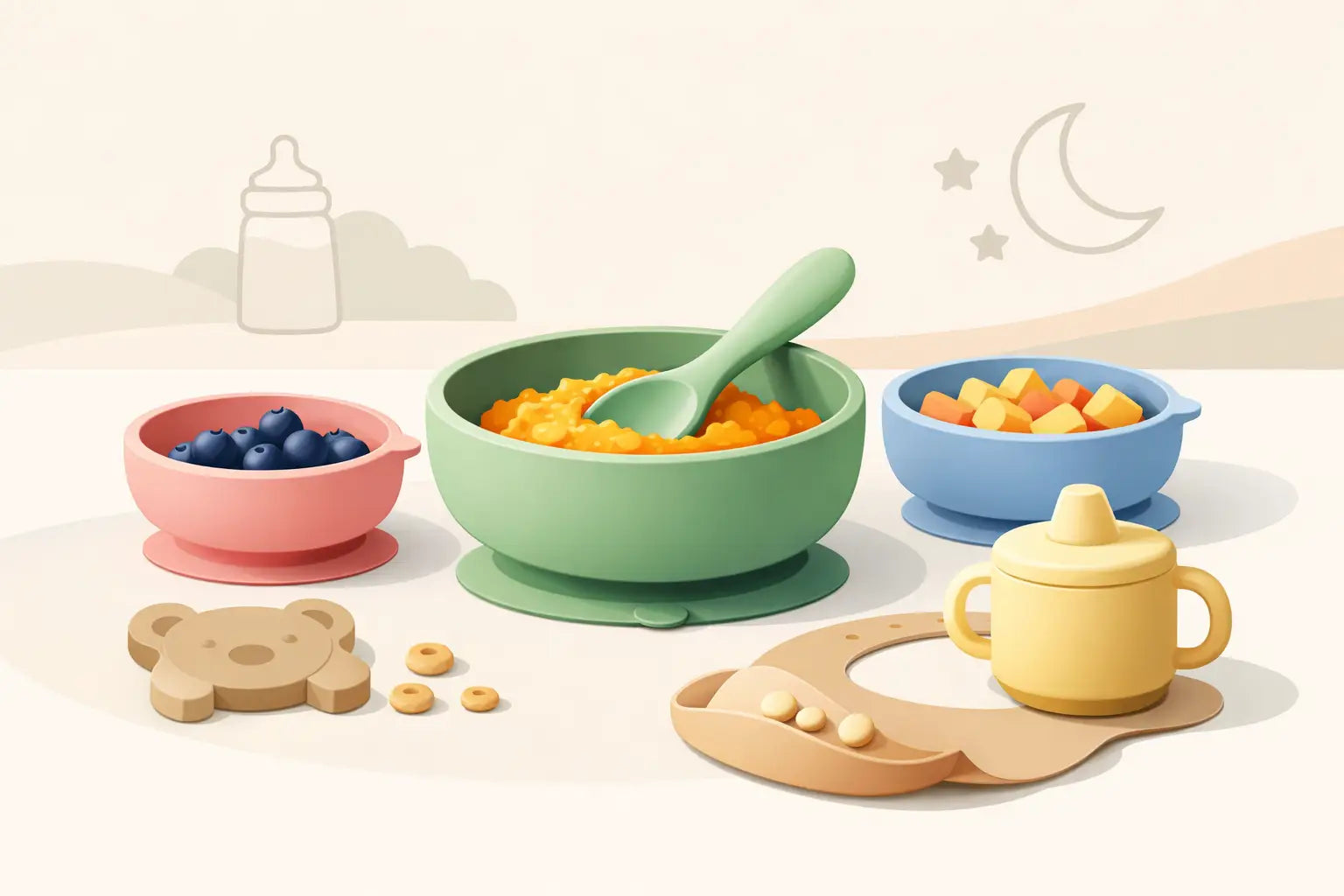
Breakfast with a baby learning to self-feed can go from sweet to splattered in seconds. A bowl gets tipped, oatmeal lands on the floor, and your little one proudly watches the whole event unfold. Silicone suction bowls for babies cannot promise a spotless meal, but they can keep food closer to where it belongs and give curious little hands more independence. 😊
For families starting purees, baby-led weaning, or toddler meals, a well-chosen suction bowl is one of those small everyday essentials that can make a big difference. The key is choosing one that fits your child, your high chair tray, and your real-life feeding routine.
Why Silicone Suction Bowls for Babies Help
A suction bowl has a wide base that presses onto a smooth, flat surface, such as a high chair tray or tabletop. This creates a temporary grip that makes it harder for a baby to slide, lift, or flip the bowl during a meal. It is especially helpful once babies become determined little explorers who want to grab everything within reach.
Silicone is popular because it is soft, lightweight, and less likely to crack if it falls. Compared with hard plastic or ceramic, it is gentler when bumped by small hands and often easier to carry for meals away from home. Many parents also appreciate that silicone feeding pieces typically have a simple, flexible shape with fewer places for food to hide.
Still, suction is support, not a guarantee. A strong toddler may eventually figure out how to release almost any bowl. The goal is not to win a battle of wills. It is to reduce unnecessary spills while helping your child practice scooping, grasping, and bringing food to their mouth.
What Makes a Good Suction Bowl
The best bowl is not always the biggest one or the one with the strongest marketing claim. Look closely at the details that affect everyday use.
A broad, smooth suction base
A wider base generally has more surface area to grip the tray. The base should sit flat, without an uneven rim that allows air underneath. Some bowls include a small pull tab for adults to lift the bowl after a meal. That feature can be very handy, but make sure it is positioned so tiny fingers cannot easily peel it up.
Keep in mind that suction works best on clean, smooth, nonporous surfaces. Textured wood, heavily scratched trays, curved tabletops, and some placemats may not provide a reliable seal. Before serving food, press the bowl down firmly and give it a gentle test tug.
The right size and shape for the meal
For first tastes and small portions of yogurt, mashed vegetables, or soft fruit, a compact bowl can be easier for a baby to reach into. A deeper bowl may better contain cereal, pasta, or foods with sauce. Very deep bowls can be frustrating for a young baby who is still learning to scoop, though, so a medium depth is often a happy middle ground.
A bowl with gently sloped sides can help a preloaded spoon gather food. Rounded interior corners are also easier to wipe clean than sharp angles. If you are feeding more than one child or packing daycare meals, having a few bowls in different sizes can make portions simpler to manage.
Baby-focused materials and care instructions
Choose bowls made for food use and clearly labeled for the age range you are shopping for. Many families look for silicone feeding products made without BPA, PVC, phthalates, or lead. It is also wise to check the product instructions for dishwasher, microwave, freezer, and heat-use guidance rather than assuming every silicone bowl handles every task the same way.
Food-grade silicone is durable, but it still deserves basic care. Inspect the bowl occasionally for tears, deep cuts, sticky residue, or a damaged suction base. Replace it if the material is no longer in good condition.
A practical design for your routine
Color is fun, and cheerful shades can make a little one eager to come to the table. But a bowl also needs to work when you are tired, rushing out the door, or cleaning up after a long day. Consider whether it stacks neatly, fits in your diaper bag, and feels easy to wash by hand if a dishwasher is not available.
Lids are useful for leftovers and travel, although a lid does not automatically make a bowl leakproof. If you plan to carry prepared food, check that the lid fits securely and keep the bowl upright. For everyday home use, a simple open bowl may be all you need.
Matching the Bowl to Your Baby’s Feeding Stage
At around the first stages of solids, adults do most of the feeding. A suction bowl can still be useful because it stays in place while you hold a spoon in one hand and steady a wiggly baby with the other. Small portions are best at this stage, since babies are learning new flavors and textures rather than finishing a full bowl.
As your child begins self-feeding, the bowl becomes more valuable as a stable practice station. Offer easy-to-scoop foods such as thick oatmeal, mashed beans, cottage cheese, soft scrambled eggs, or yogurt. A thicker food often stays on a spoon more easily than a thin puree, which can help build confidence for both baby and caregiver.
For older babies and toddlers, the bowl can hold snacks or parts of a simple meal. It may be tempting to fill it high, especially when your child is hungry, but a smaller serving with refills is often less overwhelming and less likely to spill. Their appetite can change from day to day, and that is normal.
How to Get Better Suction at Mealtime
Most reports of a suction bowl “not working” come down to the surface, not necessarily the bowl. Start with a dry, clean tray. Crumbs, water droplets, oil, and soap film can interrupt the seal. Press the base down with your palm for a few seconds before placing food inside.
Avoid using the bowl over a cloth placemat, silicone placemat, textured tray cover, or uneven tabletop unless the manufacturer says it is compatible. Silicone against silicone does not always create the same grip as silicone against a smooth plastic or glass surface.
It also helps to place the bowl within easy reach but not directly at the edge of the tray. If your baby must stretch or twist to reach it, they may pull harder and increase the chance of tipping. A supportive seat with a properly adjusted footrest can improve comfort and stability while your child learns to eat.
Safety Reminders for Happier Meals
A suction bowl is a feeding accessory, not a safety device. Stay within arm’s reach while your baby eats, and prepare food in age-appropriate shapes and textures. Follow guidance from your child’s pediatrician when you have questions about introducing foods, allergens, or choking risks.
Check the temperature of heated food carefully, especially after microwaving. Food can warm unevenly, and the bowl may feel cooler than the food inside. Stir well, let it stand if needed, and test a small amount before serving.
Wash the bowl thoroughly after each use. Strongly colored foods such as tomato sauce, berries, and turmeric may stain some silicone over time, but staining alone does not always mean the bowl is unsafe. Lingering odors, however, can be a sign that the bowl needs a more thorough wash according to its care directions.
A Small Tool That Supports Big Milestones
Mess is part of learning to eat. Those yogurt-covered fingers and determined spoon attempts are signs that your little star is building skills one meal at a time. A dependable suction bowl gives them a steadier place to practice, while giving you one less spill to chase across the kitchen floor.
Choose a size and style that works for your family, keep expectations realistic, and let mealtime be a little more about connection than cleanup. Happy babies, happy parents - and perhaps a few fewer peas under the high chair.

