

Cart
0
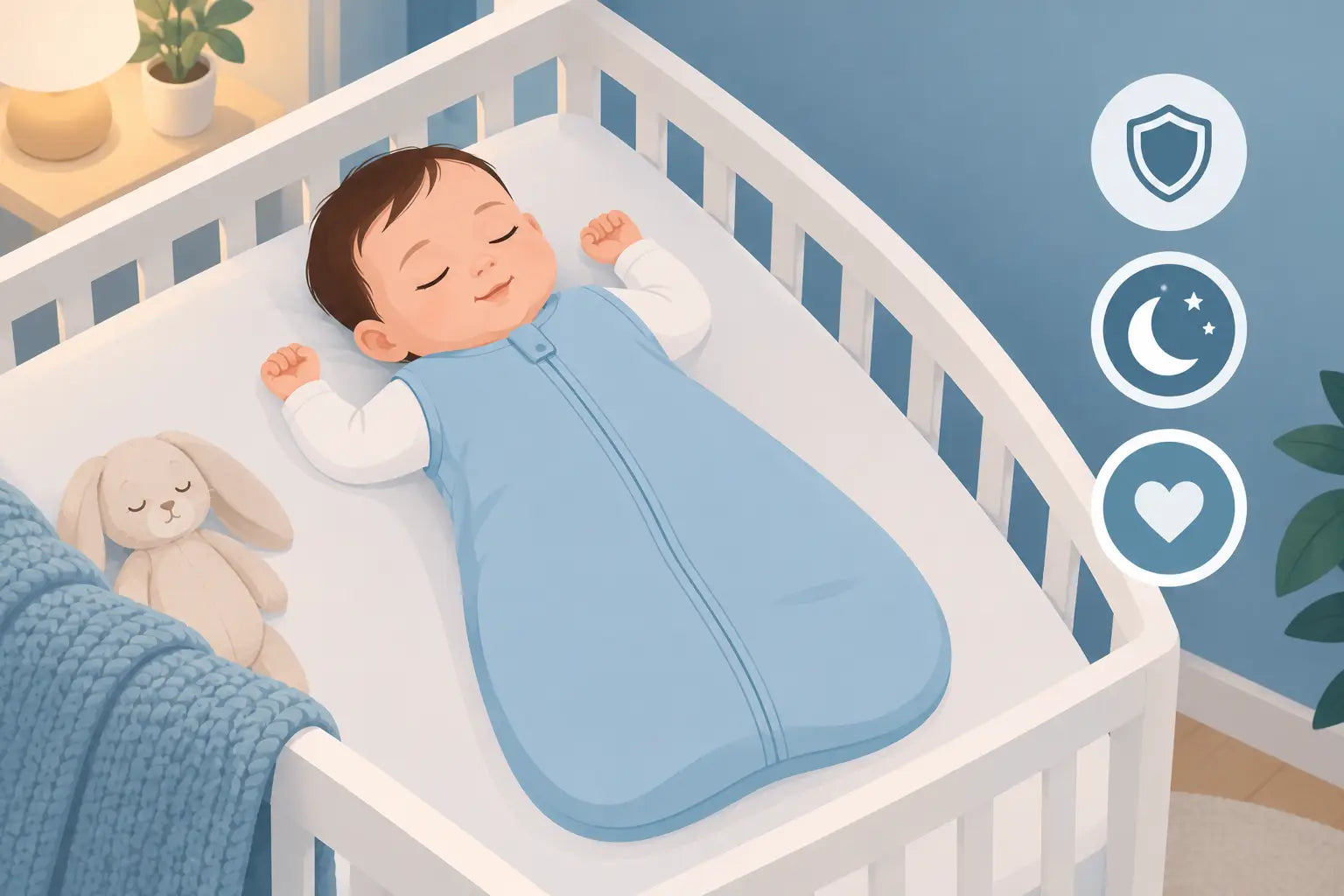
That tiny yawn, the warm post-bath cuddle, the careful transfer to the crib - bedtime is full of little moments parents want to get just right. Sleep sack safety can help make the routine feel simpler. A properly fitted wearable blanket keeps baby cozy without adding loose blankets, which do not belong in an infant's sleep space.
A sleep sack is a helpful bedtime essential, but it is only one piece of safe sleep. The safest setup is still beautifully simple: baby placed on their back in a bare crib, bassinet, or play yard with a firm, flat sleep surface. Here is how to choose and use a sleep sack with confidence, so your little star can rest comfortably. 💛
What Makes a Sleep Sack a Safer Choice?
A sleep sack, also called a wearable blanket, is designed to provide warmth while leaving baby's face and head uncovered. Unlike a loose blanket, it stays on the body as baby wiggles and kicks through the night. This can be especially useful once swaddling is no longer appropriate.
It does not replace the basics of safe sleep. Keep pillows, quilts, comforters, stuffed animals, positioners, and loose bedding out of the sleep area. Even a very soft blanket should wait until your child is old enough for it to be used safely in their sleep space.
For newborns and young babies, always place baby on their back for every sleep, including short naps. Use only the mattress and fitted sheet made for that crib, bassinet, or play yard. A wearable blanket can add comfort to this simple setup without crowding it.
Sleep Sack Safety Starts With the Right Fit
The safest sleep sack is the one that fits your baby right now, not one sized up for next season. Check the product's age, weight, and length guidance, then look at the neck and arm openings before every use.
The neck opening should be snug enough that baby's head cannot slip through it. Armholes should fit comfortably without being so wide that baby could slide down inside the sack. The body should allow natural leg movement, especially around the hips and knees, without leaving a large amount of extra fabric to bunch up.
A longer sleep sack is not automatically a better one. Excess fabric can tangle around little legs or make it harder for a baby who is learning to roll, crawl, or stand. If the sack looks oversized, rides up toward the face, or has stretched-out openings, switch to the correct size.
Zippers are convenient for those middle-of-the-night diaper changes. Choose a design with a fabric zipper cover or chin guard when possible, and make sure the zipper is fully closed and lying flat. Check regularly for loose threads, broken snaps, damaged seams, or a zipper that no longer works smoothly.
The Quick Fit Check
Before laying baby down, take a few seconds to confirm that the sleep sack is in good shape:
- Baby's head cannot pass through the neck opening.
- The armholes sit securely around the shoulders and chest.
- The fabric is smooth, with no twisting or bunching near the face.
- The zipper, snaps, and seams are intact and fully secured.
- Baby can bend and move both legs freely.
Choose Warmth Carefully, Not Just Softness
Soft fabric matters, but temperature matters too. Babies can overheat more easily than adults, so a heavier sleep sack is not always the coziest choice. Consider the room temperature, the pajamas underneath, and the sleep sack's material or warmth rating, often called TOG.
TOG ratings can be useful, but they are not perfectly standardized across every brand. Treat the label as a starting point and follow the manufacturer's clothing guidance. A lightweight cotton sleep sack may work well in a warm room, while a warmer option may suit a cooler nursery. The goal is comfortable, not bundled.
A simple cotton bodysuit or footed pajama under the sleep sack is often enough. Avoid hats, hoods, scarves, or extra blankets during sleep, even when the room feels chilly to an adult. Babies release heat through their heads, and anything loose near the head can create a hazard.
To check your baby's comfort, touch their chest or the back of their neck rather than their hands or feet. Cool hands can be normal. Sweaty hair, a hot chest, flushed skin, rapid breathing, or unusual restlessness can mean baby is too warm. Remove a layer and reassess. If your baby seems unwell or you are worried about their breathing or temperature, contact their pediatrician promptly.
Swaddles, Sleep Sacks, and Rolling Babies
A swaddle and a sleep sack are not the same thing. Swaddles wrap around the body and may keep a baby's arms contained. Sleep sacks are wearable blankets with free arms, although some transitional products offer removable or adjustable arm features.
Once your baby shows signs of trying to roll, it is time to stop swaddling with the arms contained. This can happen earlier than many parents expect. Signs include repeated attempts to roll to a side, lifting a shoulder, rocking with purpose, or rolling during tummy time.
At that stage, an arms-free sleep sack is a practical transition. It keeps the familiar bedtime feeling while giving baby full access to their arms to move and reposition. Some babies adjust quickly; others need several nights of extra reassurance. A consistent bedtime routine - feed, fresh diaper, cuddles, sleep sack, then bed - can make the change feel gentler for everyone.
Avoid weighted sleep sacks, weighted swaddles, or products that claim to hold a baby in a particular sleeping position. Babies need room to move naturally, and no wearable product should be used to restrict movement or keep a baby on their back.
Safe Sleep Sack Habits Beyond the Crib
A sleep sack is designed for supervised sleep in an appropriate sleep space, not for every outing. Do not use one in a car seat, stroller, swing, bouncer, or baby carrier unless the manufacturer specifically says it is designed for that use. Bulky fabric can interfere with proper harness positioning, and babies should not routinely sleep in sitting devices.
For car rides, dress baby in normal clothing and secure the harness snugly against their body. If additional warmth is needed after the harness is buckled, use a light layer over the straps only when it is safe and appropriate for the conditions. Once you arrive, move a sleeping baby to a firm, flat sleep surface as soon as you can.
Laundry matters, too. Wash sleep sacks according to the care label using a gentle baby-safe routine that works for your family. Skip repairs that could leave bulky patches, loose stitching, or homemade ties. If a sleep sack is worn out, stained beyond cleaning, or damaged, it is time to replace it.
When Your Baby Starts Standing
As babies become mobile, bedtime gear needs another look. A baby who can pull to stand may walk around the crib while wearing a sleep sack, which is why correct length is especially important. Choose a style that does not trail beneath their feet, and follow the product's size limits closely.
Continue to keep the crib clear. Once baby can stand, it may be tempting to add a pillow, plush toy, or blanket for comfort, but those items can also become something to climb on. A familiar sleep sack, a calm routine, and your loving goodnight can be plenty.
Every baby has their own sleep rhythm, room temperature, and stage of development. The best choice is a well-fitting, age-appropriate sleep sack used with a simple safe sleep space and a watchful parent's care. When bedtime feels uncertain, return to the basics: back to sleep, firm flat surface, bare sleep space, and a cozy wearable layer that fits just right. Happy babies, happy parents. 🌙

