

Cart
0

Last Updated: October 25, 2026
Quick Summary
Most babies are ready to teach baby straw cup skills between 6 and 9 months old, when they develop the mouth control to suck through a straw. Watch for signs of readiness like sitting with minimal support and showing interest in cups rather than relying on age alone.
- Start with plain water in a cup filled halfway to make suction easier for your baby
- Position the straw gently at baby's lips, not deep in the mouth, to avoid triggering the gag reflex
- Practice for two to three minutes at meals and snacks without forcing, as frequent short sessions work better than long ones
- Chewing the straw is normal during teething between 6 and 12 months and does not mean your baby is not ready
- Always supervise straw cup practice with your baby seated upright and still, never while moving or lying down
Table of Contents
- When to Introduce a Straw Cup to a Baby
- Choosing the Best Straw Cup for Your Baby
- Step-by-Step: How to Teach Baby to Use a Straw Cup
- Why Your Baby Spits Out Water From a Straw
- Managing Baby Chewing on Straw Cup
- Safety, Posture, and When to Seek Help
- Selecting Your First Straw Cup at Best Baby Care Outlet
- Frequently Asked Questions
When to Introduce a Straw Cup to a Baby
Most babies are ready to teach baby straw cup skills between 6 and 9 months old, when they develop the mouth control to suck through a straw. Watch for signs of readiness rather than age alone.
Signs of readiness include sitting up with minimal support, showing interest in what you're drinking, and reaching for cups or objects.
Starting early helps your baby transition away from bottles and learn to drink independently, with more time to practice without pressure.
Some babies need until 9 or even 12 months. Developmental readiness matters more than a specific age, and forcing the skill early creates frustration for both of you.
Choosing the Best Straw Cup for Your Baby
The right straw cup fits your baby's small hands and mouth and supports learning without spills or frustration. You can also explore multi-functional feeding bowls with straw options that combine several feeding tools in one product.
What Makes a Cup Straw-Ready
A good straw cup has a short straw that reaches just into the liquid, long straws make suction harder.
It should be lightweight with handles for control, and spill-proof to keep your baby willing to try again.
Look for food-grade silicone and avoid BPA, and choose a cup that comes apart easily for cleaning.
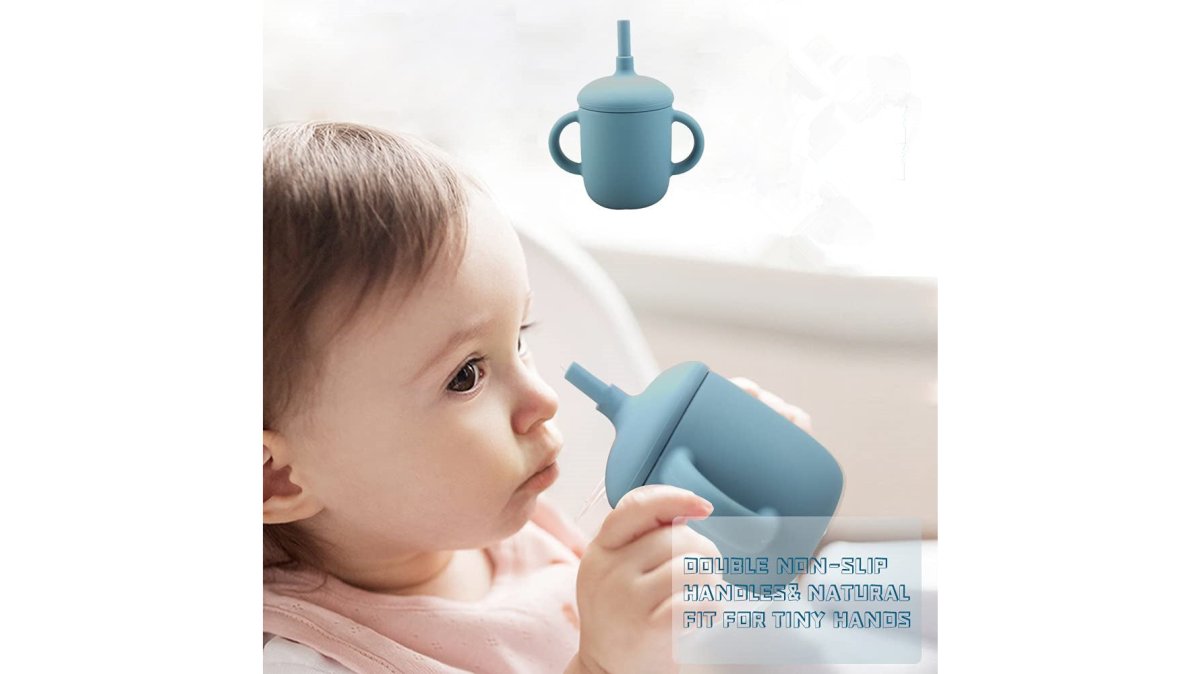
At Best Baby Care Outlet, we carry straw cups designed with these features in mind. Our Baby Feeding Straw Cup Silicone Sippy Leak-Proof Bottle includes double non-slip handles that fit tiny hands and a soft silicone straw that's gentle on gums.

Step-by-Step: How to Teach Baby to Use a Straw Cup
Learning how to teach baby straw cup skills takes patience and repetition. Break it into small steps and celebrate small wins, like touching the straw or making a sucking motion.
Step 1: Start with Small Sips of Water
Begin with plain water, the safest choice because it won't stain if spilled or upset your baby's stomach if they swallow too much.
Fill the cup halfway to make suction easier and limit gulping, and let your baby see and touch it first.
Place a little water on your baby's lower lip and let them taste it without forcing the straw in, this builds comfort and curiosity.
Step 2: Position the Straw at Baby's Lips
Place the straw gently at your baby's lips, not deep in their mouth, pushing it too far back triggers the gag reflex.
Let your baby's mouth close around the straw naturally, and don't squeeze the cup or force liquid in, they need to learn that they control the drinking.
Expect some coughing as your baby learns to coordinate sucking with swallowing. Stay calm, your reaction teaches them whether this is something to fear.
Step 3: Use the Pipette or Squeeze Method
If your baby struggles to create suction, try the squeeze method: gently squeeze a small amount of water into their mouth while the straw is at their lips.
As your baby gets the idea, squeeze less and let them do more of the work, building the strength to suck independently.
Alternatively, use a pipette dropper to squeeze small drops onto your baby's tongue or near the straw so they practice swallowing.
Step 4: Practice Regularly Without Pressure
Offer the straw cup at meals and snacks, but keep sessions to two to three minutes, frequent short practice beats long, forced sessions.
Offer the cup daily, but don't insist if your baby refuses, forcing it creates negative associations that slow learning.
Baby Feeding Straw Cup Silicone Sippy Leak-Proof Bottle →
Practice alongside your baby: drink from your own cup and show enthusiasm. Babies learn by imitating, so seeing you enjoy it makes them more likely to try.
Why Your Baby Spits Out Water From a Straw
Spitting out water is a normal part of learning. Your baby is testing cause and effect, not rejecting the cup.
Some spit because they're still coordinating sucking and swallowing, others because they took too much water, and a few because they're not ready yet.
If your baby seems playful, keep practicing; if distressed or resistant, take a break and try again in a few weeks.
Reduce spitting with smaller amounts of water and a spill-proof cup, and treat spills as part of learning.
Managing Baby Chewing on Straw Cup
Chewing is one of several normal detours in straw-cup learning. The fix is not more force, it is matching your response to the specific behavior. Use the troubleshooting map below.
Why Babies Chew the Straw
Chewing is developmentally expected, especially between 6 and 12 months when teething peaks. Biting the straw is your baby's way of gathering information, not defiance, and not a sign the cup is wrong.
Troubleshooting Map: Behavior to Response
| What you see | What it usually means | Low-pressure response |
|---|---|---|
| Chewing or gnawing the straw | Teething or oral exploration | Offer a chilled (not frozen) cup, redirect to lips once, then end the session |
| Biting down and holding | Testing cause and effect | Gently withdraw, pause 10 seconds, re-offer; do not pull hard |
| Spitting water out | Learning to release, or took too much | Put less water in the cup; expect mess; keep a cloth nearby |
| Refusing the cup entirely | Not ready, tired, or stressed | Stop for the day; re-offer in a few days with a different cup |
| Gulping and coughing | Flow too fast or position too high | Keep cup level, use a slower-flow straw, shorten sessions |
| Only plays, never sips | Still learning the mechanism | Try the squeeze or pipette method for a few sessions |
Specific Fixes That Work
- Chill the cup, not the straw alone. A refrigerated silicone straw soothes gums; a frozen straw is too hard and can hurt teeth.
- Choose a soft silicone straw over a firm plastic one. Soft straws are gentler on gums and less likely to trigger a hard bite reflex.
- Shorten the session. Two to three minutes of focused practice beats ten minutes of chewing. End on a calm note.
Pro Tip
If your baby chews every time but never sips, pause straw practice for one to two weeks and offer an open cup or a soft spout instead. Skills often click after a break, and pressure is the main thing that slows learning.
When Chewing Is a Red Flag
Occasional chewing is normal. Talk to your pediatrician if chewing is paired with persistent refusal, gagging on all textures, poor weight gain, or distress at mealtimes, these can point to oral-motor or sensory concerns that a feeding specialist should evaluate.
Safety, Posture, and When to Seek Help
Straw-cup practice is a supervised skill, not a solo activity. The safety details below are the ones caregivers most often skip, and they matter more than any teaching trick.
Positioning: Upright, Still, and Supervised
- Seat your baby upright in a high chair, floor seat, or on your lap with trunk support. A baby who is reclined, slouched, or leaning back is at higher risk of liquid pooling in the throat (Feeding young infants with their head in upright position reduces respiratory and ear...).
- Keep the cup at the mouth, not above it. Tilting the cup up or squeezing it so water shoots toward the back of the throat removes your baby's control over the flow.
- Stop practice during movement. No drinking while crawling, cruising, riding in a moving stroller, or playing. A still, seated baby can coordinate suck-swallow-breathe; a moving one cannot.
Watch Out
Never prop a straw cup, leave it in the crib, or let your baby drink lying down. These are the most common preventable setup errors and the ones most likely to cause coughing or choking episodes.
Normal Coughing vs. Choking
Coughing during early practice is expected. Your baby is learning to sequence sucking, swallowing, and breathing, and a small amount of water can briefly hit the wrong spot. A normal learning cough is:
- Strong and productive (your baby is moving air)
- Brief, followed by a return to normal breathing and interest
- Not accompanied by color change, silence, or panic
True choking looks different. Call 911 and begin infant choking relief if your baby:
- Cannot cough, cry, or make sound
- Has a silent or weak cough
- Turns blue or gray around the lips
If your baby can cough forcefully, let them cough, do not sweep the mouth with your finger or try to grab the straw. Learn infant CPR and choking relief before you start cup practice; many hospitals, fire departments, and community centers offer low-cost or free classes.
When to Pause and When to Call
Use this simple escalation path instead of guessing:
- Pause practice for a few days if your baby coughs repeatedly in one session, seems frightened by the cup, or refuses it after a coughing episode. Resume with shorter sessions and less water in the cup.
- Call your pediatrician if your baby consistently coughs, gags, or sputters with every straw attempt for two to three weeks, if drinking seems to cause fatigue, or if your baby is not gaining weight or is dropping feeds.
- Ask about a feeding evaluation if your pediatrician suspects oral-motor or sensory difficulty. A speech-language pathologist or occupational therapist who specializes in infant feeding can assess suck, swallow, and coordination.
- Seek urgent care for any choking episode that required intervention, breathing difficulty after drinking, or repeated vomiting linked to feeds.
Key Takeaway
Safety is not a separate topic from teaching, it is the teaching method. Upright, still, supervised, baby-controlled sips are both safer and more effective than any squeeze-and-pour shortcut.
Infant choking relief and CPR guidance
Selecting Your First Straw Cup at Best Baby Care Outlet
At Best Baby Care Outlet, we've selected straw cups that combine safety, durability, and design to support your baby's development.
Our Baby Feeding Straw Cup Silicone Sippy Leak-Proof Bottle is designed specifically for babies learning to drink independently.
We also offer the Baby Feeding Bottle Kid's Mug Silicone Straw Children, a lightweight option for beginners whose simple design focuses on the core skill of straw drinking.

Every cup is made from food-grade silicone and passes safety standards. Choose the option that fits your baby's stage and your family's needs.
Frequently Asked Questions
What age do babies learn to drink from a straw cup?
Most babies show readiness to learn how to teach baby to use a straw cup between 6 and 8 months old, when they can sit upright with support and show interest in what others are drinking. Some babies progress faster, while others need more time. Developmental readiness matters more than exact age. Watch for your infant's ability to close their lips around objects and their curiosity about cups during mealtimes.
How long does it take a baby to learn to use a straw cup?
Learning to use a straw cup typically takes several weeks to a few months of consistent, pressure-free practice. Some babies grasp the sucking motion within days; others need 4-6 weeks of regular exposure. The key is repetition without frustration. Offer the cup during meals and snack times, celebrate small wins, and remember that every infant develops at their own pace.
What should I do if my baby chews on the straw?
Chewing on the straw is a normal part of learning and exploration. Use a cup with a soft silicone straw that's gentle on developing gums and teeth. If chewing prevents drinking, gently redirect your baby's mouth to the straw tip and model the sucking motion. Keep practice sessions short and positive. If chewing continues, try again at the next meal without pressure.
Why does my baby spit out water from a straw?
Babies spit out water for several reasons: they may not yet understand how to coordinate sucking and swallowing, the straw might be positioned incorrectly, or they're simply exploring cause and effect. Start with just a few drops using the pipette method to help them understand the motion. Use water for practice rather than milk, and keep sessions short and playful to build confidence.
Teaching your baby to use a straw cup is a milestone that builds independence and confidence. The process takes patience, but consistent gentle practice pays off. Start when your baby shows readiness signs, choose a cup designed for learning, and celebrate small progress. Most babies master straw drinking within a few weeks of regular practice. Best Baby Care Outlet's carefully selected straw cups are designed to make this transition smooth and enjoyable for your little one.


