

Cart
0
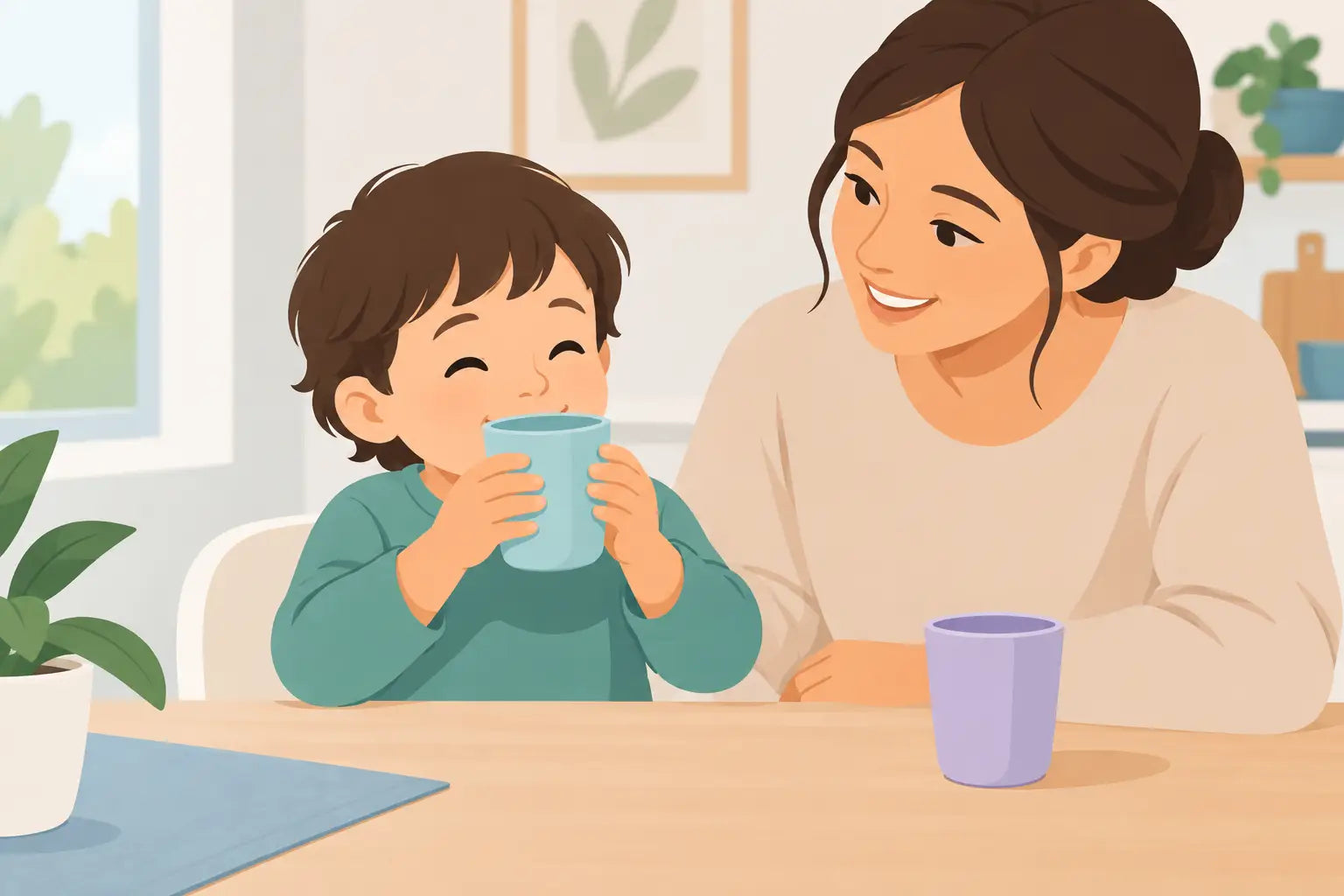
That first tiny sip from an open cup can feel like a big moment - and a very wet one. Learning how to introduce open cups is less about keeping every drop off the floor and more about giving your baby a gentle, safe chance to practice a lifelong skill. A few spills are part of the story, and with a simple routine, they do not have to make mealtimes stressful. 💛
Why Introduce an Open Cup?
An open cup lets babies practice bringing a cup to their mouth, tipping it carefully, closing their lips around the rim, and taking small sips. Those movements support coordination and can help them become more comfortable with different ways of drinking as they grow.
For many families, an open cup is a helpful companion to bottle feeding or breastfeeding once solid foods begin. It is not usually an overnight replacement. Breast milk or infant formula remains an important source of nutrition throughout the first year, so think of cup practice as a new mealtime skill rather than a test your little one has to pass.
Open cups also give parents a chance to slow down and share a face-to-face moment at the table. Your baby watches you hold the cup, pause, sip, and swallow. That little bit of modeling can make a surprising difference.
When Are Babies Ready for an Open Cup?
Many babies can begin trying a small open cup around 6 months, often near the time they start solids. Readiness matters more than the calendar. Your baby should be able to sit upright with support, show reasonable head control, and bring hands toward their mouth.
Some babies are eager to grab the cup right away. Others need several weeks of simply watching and touching it before they want a sip. Both responses are normal. If your child was born early, has feeding concerns, coughs often during drinks, or has trouble sitting upright, ask their pediatrician or a feeding specialist for guidance before moving forward.
Keep early practice short. One or two small sips with a meal is plenty. The goal is calm exposure, not volume.
How to Introduce Open Cups Step by Step
Start with a very small amount of water
At first, add only a teaspoon or two of water. A cup filled near the top is hard for tiny hands to manage and turns one quick tip into a full outfit change. Small amounts allow your baby to experience the cup without being overwhelmed.
Water is a natural choice during solid-food meals. Avoid juice as a practice drink, since it adds sweetness without helping your baby learn to enjoy plain water. Never use cow's milk as a main drink before your baby's first birthday unless your pediatrician has advised otherwise.
Choose a cup made for little hands
A small, lightweight cup with a smooth rim is easier to control than a full-size household tumbler. Look for a cup made from food-grade silicone or another durable, baby-safe material. A low, wide shape is especially helpful because it is less likely to topple over.
Some training cups have tiny handles, while others are handle-free. Either can work. Handles may give a younger baby something easy to grasp, but a handle-free silicone cup can help an older baby learn a more natural grip. What matters most is that the cup is light, not too large, and comfortable against the mouth.
Skip cups with sharp edges, breakable materials, or complicated pieces that are difficult to clean. A simple design makes daily practice much easier for busy families.
Help with both hands - and control the tilt
Sit your baby securely in their high chair, with their body upright and feet supported when possible. Place the cup against their lower lip, then slowly tip it until a small amount reaches the rim. Pause and let your baby close their lips and take the sip.
At first, keep your hands on the cup. Your baby may grab it, push it away, or tip it faster than expected. That is learning, not misbehavior. You can say something simple and cheerful, such as, “Little sip,” then bring the cup back down after each attempt.
Try not to pour water into your baby's mouth. Letting your child control the sip, with your steady support, reduces the chance of taking in too much at once.
Practice at predictable times
A relaxed meal or snack is often the best setting. Your baby is already seated, you are nearby, and there is no rush to get out the door. Offer the cup once or twice a day at first, then build from there if your baby seems interested.
Consistency matters more than long practice sessions. A minute of relaxed sipping every day is more useful than one frustrating 20-minute attempt on the weekend. Keep a washable bib, a small towel, and an extra change of clothes close by. Prepared parents can be much more patient parents.
Expect Spills, Gagging, and a Few Funny Faces
Open-cup learning is wonderfully messy. Babies are figuring out how far to tip the cup and how quickly liquid moves. They may dribble water down their chin, blow bubbles, dunk their fingers, or toss the cup when they are finished. These are common parts of exploration.
A brief cough or sputter can happen when a baby takes too big a sip. Stay calm, bring the cup away, and give them a moment to recover. If coughing, choking, watery eyes, or breathing changes happen repeatedly with drinks, stop the practice and speak with your child's pediatrician.
Do not insist on “just one more sip.” Pressure can make a new skill feel unpleasant. If your baby turns away, clamps their mouth shut, or becomes upset, end the session warmly and try again another day. Happy Babies, Happy Parents - and that includes honoring when your little one has had enough.
Open Cup, Straw Cup, or Sippy Cup?
You do not have to choose only one style forever. Each cup can have a place depending on your child's age, routine, and abilities.
An open cup gives direct practice with drinking from a rim and works beautifully at the table when an adult can help. A straw cup can be useful for outings, car rides, and independent drinking because it is usually less messy. Traditional spouted sippy cups may feel familiar to babies who use bottles, but relying on them for every drink can delay practice with other drinking skills for some children.
Many families use an open cup for one meal each day and a straw cup for water on the go. This is a practical middle ground, especially during busy seasons when your toddler wants independence but you do not want a puddle in the stroller.
Small Choices That Make Practice Easier
Set the scene for success before the cup reaches the table. A supportive high chair, an easy-to-wipe mat, and a soft absorbent bib can make cleanup feel manageable. Choose a time when your baby is alert but not overly hungry or tired. A tired baby may have less patience for a skill that requires focus.
It also helps to drink from your own cup beside your child. Use clear, simple language: “Mama drinks,” “Your turn,” or “Sip, then down.” Babies learn through repetition and observation, not lengthy explanations.
If your baby prefers grabbing the cup, allow some safe exploration before helping with a sip. Let them tap it, hold it, and examine it. Familiarity can turn a suspicious new object into a favorite mealtime tool.
Common Open-Cup Questions
What if my baby refuses the cup?
Take a break for a few days, then offer it again without pressure. You can let your baby play with the empty cup during a meal or watch you sip from a similar one. Some babies need repeated, low-pressure exposure before they are ready to drink.
Should I use a tiny shot-glass-style cup?
A very small cup can be easier to manage because it holds less water, but make sure it is sturdy, smooth, and made for babies. Avoid actual glass. Soft silicone training cups are a safer, more forgiving choice for little hands.
When should my child drink independently?
Independence grows gradually. Many babies begin by holding the cup while an adult controls the tilt, then take more control over time. Your child may need help for months, and that is completely okay. Stay close whenever they are drinking from an open cup.
The laundry may get a little more interesting while your baby learns, but every tiny sip is practice in confidence. Keep the cup small, the water simple, and the mood light. Before long, that sweet little learner will lift their cup with a proud grin - and you will be ready with a smile, a towel, and a well-earned cheer. ✨

