

Cart
0
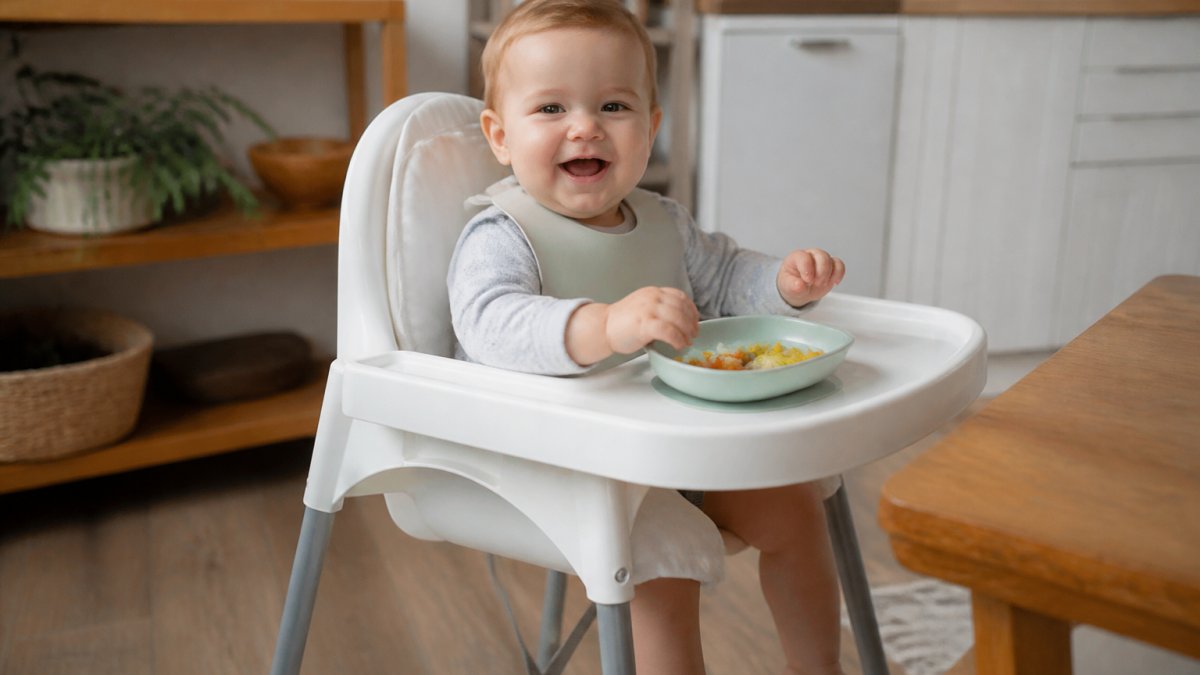
Last Updated: October 30, 2026
Quick Summary
The best high chair for starting solids holds your baby upright, supports the feet flat on an adjustable footrest, cleans up fast, and fits your table without wobbling. Look for a five-point harness, a seat that adjusts in height and depth, and a removable dishwasher-safe tray. Match the configuration to your dining space before comparing features.
- Most babies are ready for a high chair around six months, when they can sit with support and hold their head steady.
- A five-point harness secures shoulders, hips, and between the legs to stop sliding or standing mid-meal.
- A full-size high chair needs roughly 24 to 28 inches of clearance on each side for the tray and chair.
- Measure your dining chair's back height and table thickness before buying a space-saving or hook-on chair.
- Register the chair with the manufacturer and check the CPSC recall database before buying secondhand.
Table of Contents
- What to Look for in the Best High Chair for Starting Solids
- When to Start Using a High Chair
- High Chair Types and Configurations
- High Chair Safety and Positioning for Mealtime
- The Best High Chair for Baby-Led Weaning: What Changes
- Choosing an Easy-to-Clean High Chair
- Feeding Gear That Pairs With Your High Chair
- Space, Footprint, and Long-Term Ownership Costs
- Frequently Asked Questions
What to Look for in the Best High Chair for Starting Solids
The best high chair for starting solids is one that holds your baby upright, supports the feet, cleans up fast, and fits your table without wobbling. This guide from Best Baby Care Outlet walks through fit, harnesses, cleaning, and cost so you can choose with confidence instead of guesswork. Below, we break down what actually matters at the first bite.
Fit, Footrest Support, and Upright Posture
Posture does more work than most parents expect. A baby who slumps to one side cannot swallow comfortably or bring food to the mouth cleanly. Look for a seat that adjusts in height and depth, a footrest your baby's feet can press flat against, and a backrest that keeps the torso upright rather than reclined.
Watch out: a dangling footrest or a deep, reclined seat turns mealtime into a slouch, and food ends up on the lap instead of in the mouth. Adjust the footrest before the first meal, not after the tenth.
Harness Types and Safety Straps
A five-point harness is the standard for starting solids. It secures the shoulders, hips, and between the legs, which stops a wiggling baby from sliding down or standing up mid-meal. Three-point harnesses cover the waist and crotch only, so they suit older toddlers better than new sitters.
Check that straps tighten without pinching and that the buckle releases with one hand. The U.S. Consumer Product Safety Commission guidance on high chair safety is worth reading before you buy, since it covers strap, stability, and locking requirements in plain terms.
When to Start Using a High Chair
Most babies are ready for a high chair around six months, when they can sit with support, hold their head steady, and show interest in food. Sitting upright at the family table is the goal, not reclining with a bottle. If your baby still needs full trunk support, a reclined newborn seat is a better fit for now, and you can move up when the sitting gets steadier.
Once solids are underway, the next milestone arrives quickly. Our guide on when babies can use straw cups covers the transition that follows, and it pairs naturally with the high chair stage.
High Chair Types and Configurations
Four configurations cover most homes, and each trades something for something else. The useful question is not which type is best in the abstract, but which type fits your dining room, your table, and the number of children who will use it.
- Full-size standalone chairs: the most stable and adjustable option, with large trays, reclining seats, and independent legs. They need the most floor space and are the hardest to move between rooms. Best for families with a dedicated dining area and one child at a time in the seat.
- Space-saving chairs that strap to a dining chair: compact and travel-friendly, but they depend on your dining chair's shape and back height. A wide, low-backed dining chair gives the straps little to grip, and a narrow chair can let the seat shift. Check that the strap path clears the dining chair's backrest before you commit.
- Convertible chairs: grow from infant seat to toddler chair to big-kid booster, which spreads the cost over years. The trade-off is more parts, more seams, and more cleaning surfaces at each stage. Convertibles make the most sense when you plan to use one chair for several years rather than passing it down.
- Hook-on chairs: clamp to the table edge and save floor space entirely, though they only suit sturdy tables. A clamp that fits a thick butcher-block top may not close on a glass or thin veneer table, and the chair puts your baby's weight and movement directly on the table edge. Measure the table thickness and check the clamp range before buying.
A fifth option, the floor seat or booster that sits directly on a dining chair, is worth knowing about but is not a true high chair for starting solids: it offers less tray support and less footrest adjustment, so it suits older toddlers better than new sitters.
Match the configuration to your room before you match it to a feature list. A full-size chair in a small kitchen becomes a trip hazard; a hook-on chair at a wobbly table becomes a safety problem. The right pick depends on your dining setup, not on which type looks best in photos.
Pro Tip
Measure your dining chair's back height and your table's thickness before shopping for a space-saving or hook-on chair. Those two numbers eliminate more models than any review score.
Here is how the four main high chair configurations compare on what they offer and what they cost you in space or setup.
| Type | Best for | Key trade-off |
|---|---|---|
| Full-size standalone | Dedicated dining area, one child | Most floor space, hardest to move |
| Space-saving (straps to dining chair) | Compact and travel-friendly use | Depends on dining chair shape and back height |
| Convertible | Multi-year use from infant to booster | More parts, seams, and cleaning surfaces |
| Hook-on | Saving floor space entirely | Only suits sturdy tables; weight on table edge |
High Chair Safety and Positioning for Mealtime
Safety at mealtime comes down to three habits: buckle every time, keep the chair away from counters and table edges, and never leave a baby unattended in the seat. Position the tray at belly height so your baby reaches food without leaning forward, and check the chair's weight limit as your child grows.
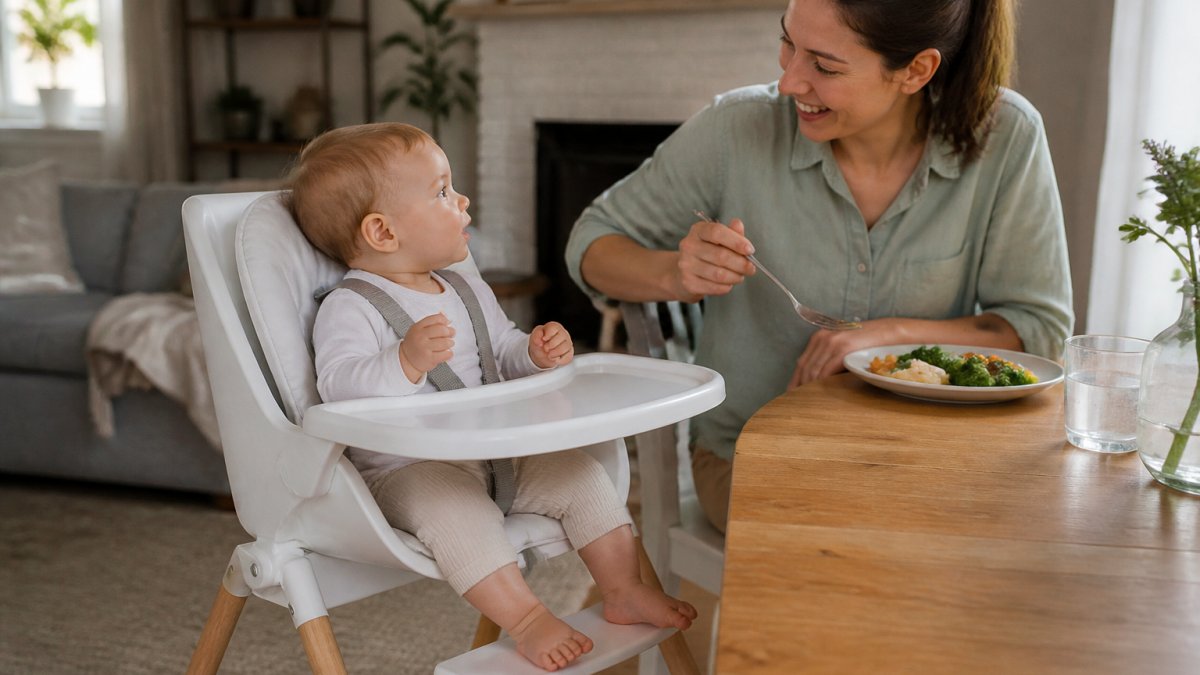
Stability matters as much as straps. Look for a chair with a wide base that resists tipping when a baby pushes against the table.
Silicone Baby Feeding Tableware Set With Bib Bowl Spoon Plate →
The Best High Chair for Baby-Led Weaning: What Changes
Baby-led weaning changes the equipment list. Instead of a deep reclined seat and a narrow spoon, you want a chair that keeps the torso fully upright, a large tray that catches dropped food, and surfaces you can wipe in one pass. A footrest becomes more important here, because a baby who can brace the feet has better control when grabbing and chewing.
The best high chair for baby-led weaning also has fewer crevices. Soft cushions and fabric covers trap mashed banana and cereal, so removable, wipeable seats win. If you plan to serve purees, our silicone squeeze spoon is made for feeding porridge and purees.

Choosing an Easy-to-Clean High Chair
An easy-to-clean high chair has a smooth seat, a removable dishwasher-safe tray, and no deep seams where crumbs collect. The tray insert matters most: a flat, rimmed tray that lifts off and fits in the dishwasher saves scrubbing every night. Legs with open frames clean faster than tubular designs with hidden joints.
Silicone placemats and suction bowls cut cleanup further, because they stay put instead of landing on the floor. Our silicone plate and bowl set features a non-slip suction design, and the bib cover for the dining chair is designed to catch food that misses the tray.

Feeding Gear That Pairs With Your High Chair
The right gear makes the chair work harder. A suction tableware set keeps plates in place, a pocket bib catches what drops, and a squeeze spoon handles porridge without a separate bowl. Our silicone tableware set with bib, bowl, spoon, and plate is designed for this stage of feeding.

Space, Footprint, and Long-Term Ownership Costs
Measure before you buy, and measure in the units your room actually uses. A full-size high chair needs roughly 24 to 28 inches of clearance on each side so the tray can slide and the chair can be pulled back from the table. Foldable models store flat against a wall, which matters in small kitchens and apartments, but check the folded depth rather than trusting the word "foldable" on the box.
Footprint is only half the space story. The chair also needs room for the tray to swing or lift off, and room for a parent to stand beside it during a messy meal. A chair that fits the corner but leaves no standing room turns every cleanup into a reach across the seat.
Long-term cost is less about the sticker price and more about how many stages the chair covers. A convertible chair that serves from about six months to the school years often costs less overall than three separate seats, but only if the conversion parts are included rather than sold separately.
Replacement parts are a hidden line item. Trays crack, straps fray, and cushions stain beyond cleaning. Check the manufacturer's parts availability before you buy.
Finally, register the chair with the manufacturer so recall notices reach you directly, and check the U.S. Consumer Product Safety Commission recall database before buying secondhand. A used chair with a frayed strap or a missing locking pin is not a bargain at any price.
Key Takeaway
Total cost of ownership = sticker price + replacement parts over the years you keep the chair − resale value. A chair that converts through three stages and keeps parts in stock usually wins that equation, even when it costs more up front.
Frequently Asked Questions
What should I look for in a high chair for starting solids?
Prioritize an adjustable seat and footrest so your baby sits upright with feet supported, a five-point harness for secure fit, and a removable tray that is dishwasher-safe. Check stability and tip resistance, and confirm the weight limit and age range cover the months ahead. A high chair that fits your child properly and wipes down quickly will get used far more than one with extra features you never touch.
When can a baby start using a high chair?
Most babies are ready for a high chair when they can sit upright with minimal support and hold their head steady, which usually happens around 6 months. That timing lines up with readiness for starting solids. Before then, a reclined feeding seat may suit younger infants, but for actual mealtime at the family table, wait until your baby can sit upright and bring hands to mouth.
Do babies need a footrest in a high chair?
A footrest gives your baby stability and supports upright posture, which matters for safe swallowing and comfortable feeding. Without foot support, many babies slouch or dangle, and that can make mealtime harder. Look for an adjustable footrest that moves as your growing child gets taller, and set it so feet rest flat rather than swinging.
How do I clean a high chair after starting solids?
Wipe the tray and seat surfaces right after each meal, then remove the tray for a dishwasher cycle if it is dishwasher-safe. Check the seat crease, harness straps, and the gap between tray and seat for crumbs and food traps, since those spots collect the most mess. A wipeable seat with fewer crevices and a removable tray cuts cleanup time substantially in daily use.
Is a high chair the only gear I need for starting solids?
A high chair is the anchor, but suction bowls and plates, a soft-tipped spoon, and a waterproof bib make mealtime easier. Suction bases keep dishes on the tray instead of the floor, and a pocket bib catches dropped food. Silicone feeding tableware sets, such as those at Best Baby Care Outlet, are one option for mealtime gear.
Choosing a high chair is really a decision about fit, cleanup, and how long the seat will serve your family. At Best Baby Care Outlet, we curate feeding gear with the details that matter at mealtime: food-grade silicone tableware, waterproof bibs, and suction sets that stay on the tray. Browse our feeding collection to find pieces that pair with your chair, then check out with the essentials your first solids stage needs.


