

Cart
0

Last Updated: October 26, 2026
Quick Summary
Eco friendly baby nursery decor starts with the fabrics and finishes your baby actually touches, not the wall color. Choose organic cotton, bamboo, or hemp textiles first, then verify claims through certifications like GOTS, OEKO-TEX Standard 100, and GREENGUARD Gold, since no single label covers everything.
- GOTS covers the full textile supply chain but does not certify furniture, paint, or wall decor.
- OEKO-TEX and GREENGUARD both let you search certified products in their online databases.
- Ask the paint desk for the technical data sheet and compare products on the VOC number.
- Anchor dressers, bookcases, and changing tables to the wall with the manufacturer's anti-tip kit.
- A cotton knitted blanket at $17.95 is a low-risk way to add natural fiber.
Table of Contents
- Start With the Materials That Touch Your Baby Most
- Sustainable Nursery Ideas That Work in Small or Rented Rooms
- Choosing Non-Toxic Nursery Decor Without Guesswork
- Low-VOC Paint for Nursery Walls and Trim
- DIY Nursery Decor Ideas Using Natural and Reclaimed Materials
- Budget Tiers: What Eco-Friendly Nursery Decor Actually Costs
- Shop the Best Baby Care Outlet Collection for Your Eco-Friendly Nursery
- Frequently Asked Questions
Start With the Materials That Touch Your Baby Most
Eco friendly baby nursery decor starts with the fabrics and finishes your baby actually touches, not the wall color.
Organic cotton, bamboo, hemp, and other natural fibers breathe better and are usually grown with fewer synthetic pesticides than conventional cotton.
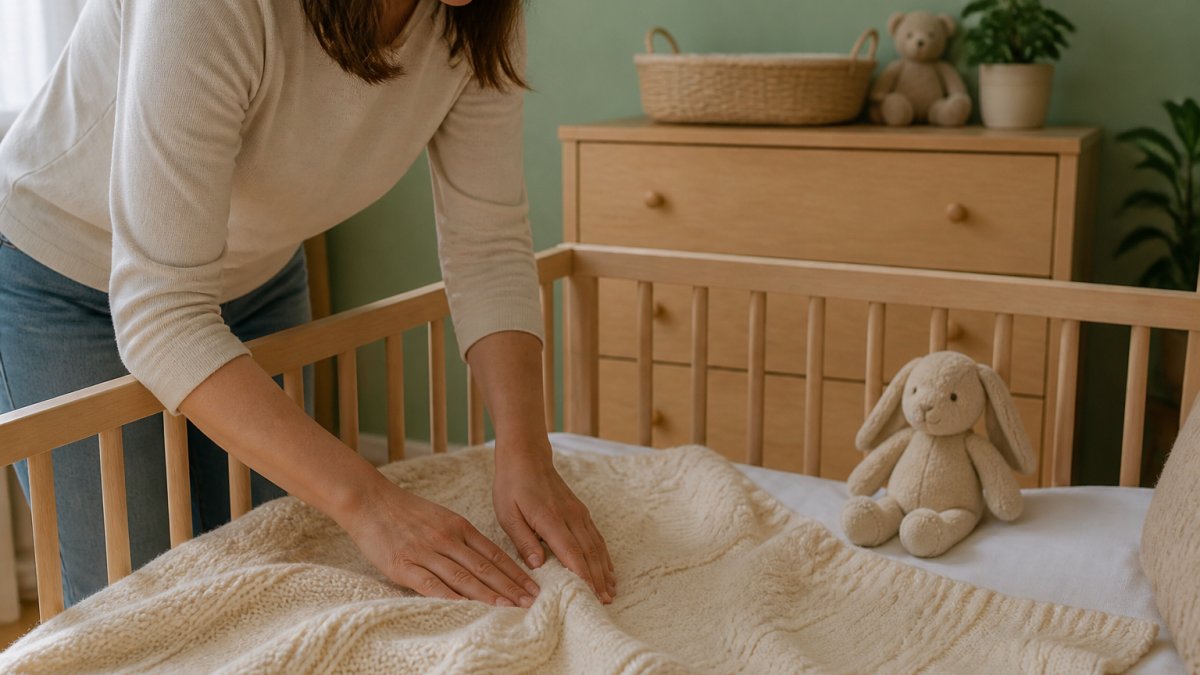
Our organic cotton muslin bib and bonnet set is a good starting point: certified organic muslin, hypoallergenic, and free of the chemical finishes that irritate delicate skin. A soft knitted baby blanket in cotton gives you a skin-friendly layer for the crib, and both are the kind of low-risk purchase that lets you test a material before committing to a whole room.


Sustainable Nursery Ideas That Work in Small or Rented Rooms
Small and rented nurseries force better decisions. You cannot repaint, so you lean on textiles, rugs, and removable wallpaper instead of permanent finishes. That is not a compromise; it is often the greener route, since nothing gets ripped out and thrown away in two years.
- Choose a natural-fiber rug you can roll up and take with you
- Use a cotton or linen curtain instead of a blind, for both light control and air flow
- Pick second-hand or reclaimed furniture, then refinish it with a low-VOC product
For layout and storage that keeps working as your baby grows, our guide to nursery decor ideas that grow with your baby walks through safe sleep, smart storage, and soft layers for a room that adapts.
Choosing Non-Toxic Nursery Decor Without Guesswork
Non-toxic nursery decor is decor made without harmful chemicals in its finishes, adhesives, or fibers, and that is the definition worth carrying into every purchase. For the same scrutiny applied to the toys in the room, see our guide to non-toxic baby toy materials. The problem is that "non-toxic" is not a regulated label on home goods, so you have to read for it yourself.
What the Common Certifications Actually Mean
- GOTS (Global Organic Textile Standard) covers the full textile supply chain, from fiber to finished product. It requires organic fiber content and restricts a long list of chemicals in processing, including dyes and finishes. It does not certify furniture, paint, or wall decor.
- OEKO-TEX Standard 100 tests finished textile articles for harmful substances, including formaldehyde, heavy metals, and certain dyes. It can apply to conventional or organic fibers, so it tells you about chemical safety, not organic farming.
- GREENGUARD Gold certifies low chemical emissions for products used in environments for sensitive populations, including nurseries and schools. It is common on furniture, mattresses, and some paints and sealants.
No single label covers everything. A GOTS-certified blanket says nothing about the paint on the crib, and a GREENGUARD Gold crib says nothing about the sheets. Build your screen around the material category, not a single badge.
How to Verify a Claim Before You Buy
- Check the certification body's own online product database when one exists; OEKO-TEX and GREENGUARD both let you search certified products.
- Ask for the certificate number and the testing laboratory. A legitimate seller can supply both.
- Read the technical data sheet for paints, sealants, and adhesives. It lists the actual VOC content in grams per liter, which is more useful than a front-label claim.
Watch Out
Pressed-wood furniture, some wall decals, and vinyl wallpaper can release VOCs for weeks after unboxing. Assemble and air them out in another room first if you can, and keep the nursery ventilated while anything new off-gasses.
Screen by Category, Not by Label
- Textiles (sheets, blankets, curtains, crib skirts): look for GOTS or OEKO-TEX Standard 100.
- Furniture and mattresses: look for GREENGUARD Gold and FSC-certified wood, and ask about the finish.
- Paints, primers, and sealants: look for Green Seal or UL ECOLOGO, and check the VOC number on the data sheet.
A practical shortcut: keep a running list on your phone of the certification you need for each category, and check it against the product page before you add anything to the cart. That one habit replaces most of the guesswork.
Low-VOC Paint for Nursery Walls and Trim
Low-VOC paint for nursery walls and trim is paint formulated to release fewer volatile organic compounds as it dries, which improves indoor air quality in the room your baby sleeps in. If you are painting at all, this is the single highest-impact swap you can make. But "low-VOC" on the front of the can is a claim, not a measurement, so the work is in reading the back of the label.
Read the Number, Not the Badge
VOC content is reported in grams per liter (g/L) on the technical data sheet. Federal rules cap VOC content for certain architectural coatings, and many states set stricter limits, so the same product line can differ by region. A few practical checks:
- Ask the paint desk for the technical data sheet and find the VOC line. Compare products on that number rather than on the marketing name.
- Look for a third-party certification such as Green Seal or UL ECOLOGO in addition to the VOC number; those programs also screen for other chemical content.
- Remember that low-VOC refers to the base paint. Tinted paint adds colorant, and some colorants carry additional VOC content, so ask whether the tint affects the rating.
- Flat and matte finishes generally carry lower VOC levels than high-gloss, and they hide wall imperfections better in a nursery anyway.
Time the Job Around the Due Date
Paint well before your due date so the room has time to air out, and keep windows open during and after application. A common pattern is to paint at least several weeks before the baby arrives, then ventilate daily. The same logic applies to trim, primer, and any sealer you put over reclaimed wood. A low-VOC topcoat protects the finish without undoing the work you did choosing clean materials.
Pro Tip
If you cannot paint, removable wallpaper and framed art let you change the look without a permanent finish. Check the adhesive on removable products too, since that is where much of the volatile content sits.
Place and Anchor Decor With Safety in Mind
Paint and finishes are only half the air-quality and safety story. How you place what you hang and set down matters just as much in a room where a baby sleeps.
Ins Hot Sale Baby Blanket Solid Color Knitted Blanket For Baby Baby Quilt →
- Anchor furniture. Dressers, bookcases, and changing tables should be secured to the wall with the anti-tip kit the manufacturer supplies. This is the single most important placement step in any nursery.
- Keep the sleep space clear. Follow safe-sleep guidance and keep loose decor, pillows, blankets, and hanging items out of the crib and away from the sleep area.
- Hang art and shelves out of reach. Use wall anchors rated for the weight, and keep shelves and frames high enough that a climbing toddler cannot pull them down.
- Secure cords and curtains. Window blind cords are a known strangulation hazard; choose cordless blinds or secure cords out of reach, and keep curtain panels short enough not to be grabbed.
A room that is painted with a verified low-VOC product, aired out, and set up with anchored furniture and a clear sleep space does more for your baby's indoor environment than any single decor purchase.
DIY Nursery Decor Ideas Using Natural and Reclaimed Materials
DIY nursery decor ideas built on natural and reclaimed materials save money and keep usable goods out of the waste stream. A dresser found second-hand and refinished often outlasts a new flat-pack piece, and you control exactly what goes on the surface.
- Refinish a second-hand dresser or bookshelf with a low-VOC paint or natural oil
- Frame fabric scraps or pressed leaves for wall art instead of buying printed canvases
- Sew simple cotton curtains or a crib skirt from natural-fiber yardage
- Build a shelf from reclaimed wood, sanded and sealed with a plant-based finish
If you would rather finish the room with a ready-made piece, a cartoon crib bumper and room accessory set in cotton can anchor the crib area while you work on the DIY pieces around it.

Budget Tiers: What Eco-Friendly Nursery Decor Actually Costs
Eco-friendly decor does not have to mean top dollar. The cost depends on how much you make versus buy, and where you spend. Here is how we would split a nursery budget across three tiers.
| Tier | What You Buy | What You Skip | Where the Money Goes |
|---|---|---|---|
| Lean | Second-hand furniture, cotton blankets, DIY wall art | Custom curtains, new rugs | Textiles and a low-VOC paint can |
| Mid | One or two certified organic pieces, a natural-fiber rug | Full furniture sets | Certified fabrics and a quality rug |
| Premium | Certified organic bedding, solid-wood furniture, custom curtains | Trend pieces you will replace | Durable pieces that last through toddlerhood |
Our own blankets sit at the lean-to-mid end: a cotton knitted blanket at $17.95 and a cotton-acrylic knit at $20.23 are low-risk ways to add natural fiber without a big outlay.
Shop the Best Baby Care Outlet Collection for Your Eco-Friendly Nursery
Building an eco friendly baby nursery decor plan comes down to a simple order of operations: get the fabrics against your baby's skin right, choose low-VOC finishes for anything painted or sealed, and let small-space and budget limits guide the rest.
That is where we come in. Best Baby Care Outlet curates baby essentials with a focus on safety, comfort, and style, from soft clothing and cozy rompers to the blankets and accessories that finish a nursery.
Get started with Best Baby Care Outlet and build a nursery that is gentle on your baby and easier on your mind.
Frequently Asked Questions
What materials are best for eco-friendly nursery decor?
Look for natural fibers like organic cotton, bamboo, hemp, and linen, plus solid wood or reclaimed wood furniture. For paints and finishes, choose low-VOC or no-VOC options. Avoid synthetic foams and plastics where your baby will spend the most time, and check for certifications like GREENGUARD Gold or OEKO-TEX when available. These choices reduce volatile organic compounds in the air and keep the room safer for a developing respiratory system.
How can I make a baby nursery more sustainable on a budget?
Start with second-hand finds for furniture and decor, which keeps items out of landfills and saves money. Repurpose items you already own, like dressers or bookshelves, and repaint them with low-VOC paint. Choose organic cotton or bamboo blankets and curtains only where they touch your baby directly. Small swaps, such as natural-fiber rugs and energy-efficient LED bulbs, add up without a full renovation.
Is low-VOC paint safe for a nursery, and how long should I wait before using the room?
Low-VOC and no-VOC paints are formulated to release fewer volatile organic compounds than standard paints. Even so, allow at least 48 to 72 hours of ventilation after painting, and keep windows open and fans running. If possible, paint several weeks before your due date. Pregnant individuals should avoid doing the painting themselves and stay out of the room until the smell has cleared.
Where can I shop for eco-friendly baby nursery decor?
Look for retailers that list materials and certifications clearly. Best Baby Care Outlet offers organic cotton accessories like the Newborn Hat and Bib Set and cotton-blend knitted blankets that fit an eco-friendly nursery. For larger items, check local second-hand stores and marketplaces first. Always ask for material details and return policies before buying, especially for textiles that will be against your baby's skin.
What natural decor is safe to use in a baby's room?
Safe natural decor includes solid wood frames, organic cotton wall hangings, wool or cotton rugs, and plants placed out of reach. Avoid items with small detachable parts, sharp edges, or long cords near the crib. Keep all decor, including wall art and mobiles, securely fastened and positioned away from the sleep area. Check that any painted or stained wood has a low-VOC finish and has fully cured before bringing it into the room.


